Tag Archives: GHK-Cu

GHK-Cu: Complete Research Guide to the Copper Tripeptide
GHK-Cu

Research Use Only Notice: GHK-Cu is a research peptide intended for in-vitro and animal research applications. Cosmetic-grade GHK-Cu formulations exist as permitted cosmetic ingredients and are distinct from research-grade compound. Nothing in this article constitutes medical advice, dermatologic guidance, or instructions for personal use.

GHK-Cu — glycyl-L-histidyl-L-lysine bound to a copper ion — is one of the most extensively studied copper peptides in dermal biology research. The compound occurs naturally in human plasma at concentrations that decline progressively with age, a feature that has driven decades of research interest. Published literature documents GHK-Cu modulating over 4,000 genes related to repair, regeneration, and aging biology — making it one of the most mechanistically diverse research peptides in the modern catalog. This complete guide from the chemistry team at OPS Peptide Science walks through what GHK-Cu is, how it works, and where it sits across skin biology, wound healing, and gene expression research.

For the broader skin biology research context, see our companion guides on what do copper peptides do for your skin, can you use peptides with retinol, and peptides for anti-aging and longevity.

What Is GHK-Cu?

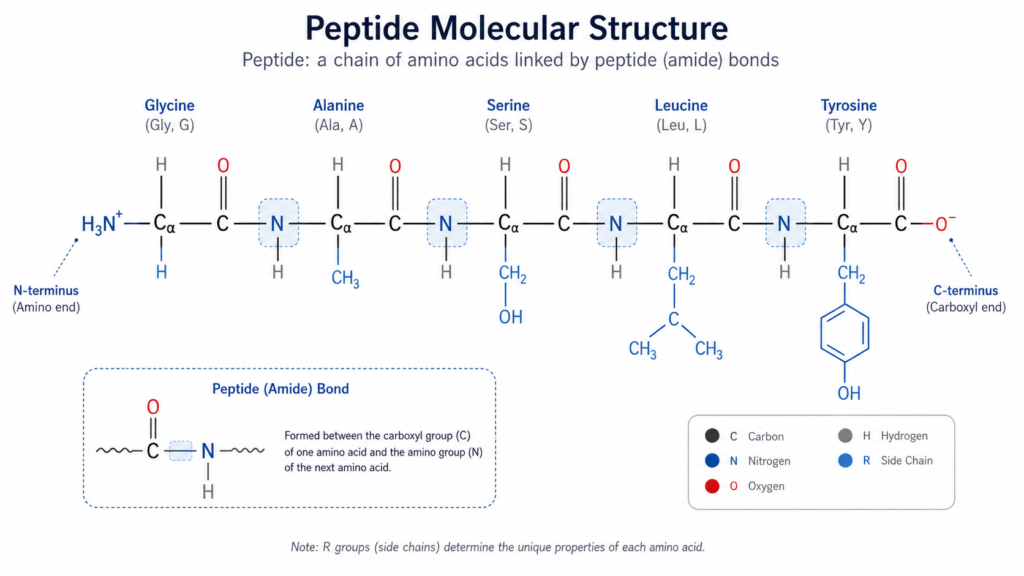
GHK-Cu is a copper-binding tripeptide consisting of three amino acids — glycine, L-histidine, and L-lysine — coordinated with a copper(II) ion. The peptide occurs naturally in human plasma at high concentrations in young adults (~200 ng/mL), declining substantially by age 60 (~80 ng/mL). This natural decline drives much of the research interest in supplementing exogenous GHK-Cu.

Key facts about GHK-Cu:

  • Chemical class — copper-coordinated tripeptide (3 amino acids)
  • Molecular weight — approximately 401 Da (340 Da for the peptide + ~62 Da for the copper coordination)
  • Sequence — Gly-His-Lys (glycyl-L-histidyl-L-lysine)
  • Form — typically supplied as lyophilized blue-colored powder (color comes from the copper coordination); reconstituted with bacteriostatic water
  • Cosmetic-grade exists — GHK-Cu is permitted as a cosmetic ingredient in skincare products at controlled concentrations
  • Research-grade exists — sold under research-use-only labeling for in-vitro and animal research, typically 99%+ purity

The blue color of properly reconstituted GHK-Cu is a quick visual indicator of the copper coordination — uncomplexed GHK has no significant color. If a GHK-Cu solution appears clear or colorless, the copper coordination may be incomplete or the compound may be primarily uncomplexed GHK rather than GHK-Cu.

GHK-Cu

GHK-Cu Structure and Chemistry

The GHK-Cu structure is small but chemically elegant. Key features:

  • Copper coordination at the histidine imidazole — the histidine ring nitrogen is the primary copper-binding site
  • Additional copper coordination via amine groups — the lysine side chain and N-terminal amine participate in the copper binding pocket
  • Square-planar copper geometry — the copper(II) ion sits in a defined geometric configuration that determines activity
  • Naturally occurring — same molecular structure as the GHK-Cu found in human plasma, just synthesized for research-grade purity

The copper coordination is what gives GHK-Cu most of its activity — research has documented different activity profiles for GHK alone versus GHK-Cu. The copper ion isn’t an accessory; it’s central to the compound’s mechanism.

How GHK-Cu Works in Research (Mechanism)

Unlike most research peptides that act through a single receptor, GHK-Cu has been documented to modulate multiple biological pathways simultaneously. This is one of the unusual features that drives research interest. Documented mechanisms include:

  • Gene expression modulation — published research has measured GHK-Cu influence on the expression of over 4,000 genes related to repair, regeneration, antioxidant systems, and cellular aging
  • Copper-dependent enzyme cofactor activity — copper is required for several antioxidant enzymes (most notably superoxide dismutase), and GHK-Cu participates in copper delivery to these systems
  • Collagen synthesis upregulation — fibroblast cultures exposed to GHK-Cu produce measurably more Type I collagen than control conditions
  • Glycosaminoglycan synthesis — hyaluronic acid and related GAGs increase in research models
  • Fibroblast proliferation and migration — measured in cell culture studies
  • Anti-inflammatory effects — pro-inflammatory cytokine modulation in research models
  • DNA repair pathway engagement — research has documented effects on genes involved in cellular DNA repair

The multi-pathway, multi-target nature of GHK-Cu’s mechanism is what makes the compound interesting in research contexts — it doesn’t fit the “one receptor, one effect” model of most synthetic peptides. The published GHK-Cu research literature on PubMed documents these mechanisms across hundreds of studies.

GHK-Cu Research Applications

GHK-Cu research applications span several research areas, all building on the mechanism diversity:

Skin Biology Research

The largest body of GHK-Cu research focuses on skin biology endpoints — collagen synthesis, fibroblast activity, dermal extracellular matrix biology, and broader skin aging research. The research literature spans cell culture studies, animal dermal models, and topical formulation research.

Wound Healing Research

Animal wound healing models — burn, surgical, diabetic ulcer — have documented GHK-Cu effects on re-epithelialization, granulation tissue formation, and overall wound closure timelines. The mechanism involves multiple pathways: angiogenesis, fibroblast migration, anti-inflammatory effects, and collagen production.

Hair Follicle Research

Research on hair follicle stem cells, follicle cycling, and broader hair biology has documented GHK-Cu effects. Some published research links GHK-Cu to hair density and growth phase markers in animal models.

Antioxidant System Research

Copper is a cofactor for several antioxidant enzymes (Cu/Zn superoxide dismutase being the most studied). GHK-Cu’s role in copper delivery makes it relevant to antioxidant system research — published studies document effects on cellular oxidative stress markers.

Aging Biology Research

GHK-Cu’s natural decline with age and its broad gene expression effects have driven aging-biology research. Research models studying senescence markers, DNA repair pathways, and cellular aging endpoints have documented GHK-Cu effects across multiple study designs.

GHK-Cu

Cosmetic-Grade vs Research-Grade GHK-Cu

GHK-Cu is unusual among research peptides because it exists in two distinct legal categories in the United States:

CategoryCosmetic-GradeResearch-Grade
FormFinished cosmetic productLyophilized research vial
Sold asSkincare serum, creamResearch peptide
Intended forTopical cosmetic useIn-vitro and animal research
RegulationFDA cosmetic regulationsResearch-use-only labeling
ConcentrationControlled (typically 0.5-2% in formulation)Pure compound for research dosing
Purity standardsCosmetic-grade (variable)99%+ HPLC-MS verified

The two categories serve different purposes and are not interchangeable. Cosmetic-grade GHK-Cu is designed for topical use within finished products. Research-grade GHK-Cu is a reagent for laboratory studies, sold under research-use-only labeling and never for human consumption.

GHK-Cu Dosing in Research Models

Research dosing of GHK-Cu varies significantly by application area:

  • Topical research formulations — typically reported in % w/w of finished formulation (0.05-2%); applied to dermal research sites
  • Cell culture concentrations — typically reported in nM to μM ranges; depends on cell type and endpoint
  • Animal model injection studies — subcutaneous administration typical; dosing reported in mg/kg body weight
  • Daily dosing common — GHK-Cu has a relatively short half-life requiring frequent administration in research protocols

Research protocols should always reference published methodology for the specific research model. Topical and injection routes produce different research data and aren’t directly comparable.

GHK-Cu Storage and Stability

GHK-Cu stability requires more attention than most research peptides because of the copper coordination. The copper-peptide complex can be destabilized by:

  • Strong reducing agents — can strip the copper from the complex
  • Chelating agents — can sequester the copper away from the peptide
  • Extreme pH conditions — can disrupt the coordination geometry
  • Heat and light exposure — standard peptide degradation factors
Storage ConditionFormStability Window
-80°CLyophilized powder3-5+ years
-20°CLyophilized powder18-24 months
2-8°CLyophilized powder6-12 months
2-8°CReconstituted in BAC water21-28 days
Room temperatureLyophilized powder2-4 weeks for transit

For practical storage protocols, see our guide on how long do peptides last at room temperature. Protect GHK-Cu from light during storage when possible — opaque containers or refrigerator cardboard boxes work well.

GHK-Cu vs AHK-Cu and Other Copper Peptides

Several related copper peptides exist in research contexts. Brief comparison:

CompoundSequenceMain Research Focus
GHK-CuGly-His-Lys + CuMost studied; broad research applications
AHK-CuAla-His-Lys + CuHair research; complementary to GHK-Cu
GHK (uncomplexed)Gly-His-Lys (no copper)Limited research; different activity profile
Custom copper peptidesVariousEmerging research area

GHK-Cu remains the most-cited research compound in this family due to its substantial published literature and well-characterized mechanism. Other copper peptides extend the research into specific applications (AHK-Cu in hair biology, custom variants for receptor-specific research).

How to Identify Quality Research-Grade GHK-Cu

Research-grade GHK-Cu quality criteria differ slightly from other peptides because of the copper coordination:

  • Blue-colored lyophilized powder — confirms the copper is coordinated with the peptide; a white powder may indicate uncomplexed GHK
  • 99%+ HPLC-MS verified purity — confirms the compound is GHK-Cu, not degradation products
  • Per-lot Certificate of Analysis — each batch independently tested
  • Mass spectrometry identity confirmation — confirms molecular weight matches GHK-Cu (~401 Da)
  • Copper content verification — confirms the copper coordination is present, not just GHK peptide alone
  • Research-use-only labeling — required for the non-cosmetic, non-pharmaceutical category

At OPS Peptide Science, every GHK-Cu vial ships with a unique BIOVIRIDIAN COA code. Customers can verify the Certificate of Analysis for their specific lot — confirming HPLC-MS purity and identity verification before opening the vial.

GHK-Cu Regulatory Status

GHK-Cu occupies a unique dual-category position in US regulation:

  • Cosmetic-grade GHK-Cu — permitted as a cosmetic ingredient in skincare products at controlled concentrations
  • Research-grade GHK-Cu — sold under research-use-only labeling for in-vitro and animal research
  • Not FDA-approved as a drug — no pharmaceutical approval for systemic therapeutic use
  • Not WADA-prohibited — unlike some peptides, GHK-Cu is not on the WADA Prohibited List as of current updates
  • Not DEA-scheduled — no controlled substance status

For the complete legal framework around research peptides, see our detailed guide on are peptides illegal. According to NIH dermal research literature, GHK-Cu remains an active area of investigation across multiple research applications.

GHK-Cu

FAQ

What is GHK-Cu?

GHK-Cu is a tripeptide (glycyl-L-histidyl-L-lysine) bound to a copper ion. It occurs naturally in human plasma at concentrations that decline with age and has been extensively studied in skin biology, wound healing, antioxidant, and gene expression research.

What’s the difference between GHK and GHK-Cu?

GHK is the uncomplexed tripeptide. GHK-Cu is the same peptide bound to a copper ion. Research has documented different activity profiles between the two — the copper coordination is functionally important, and most of the documented skin biology and wound healing effects are attributed to the copper-bound form.

How does GHK-Cu affect collagen?

Research has documented GHK-Cu upregulating Type I collagen synthesis in fibroblast cultures. The mechanism involves both direct effects on fibroblast activity and modulation of genes involved in extracellular matrix protein synthesis (decorin, glycosaminoglycans, etc.).

Can GHK-Cu be used with retinol?

Combination research exists but requires careful design — pH and stability interactions can compromise both compounds in direct mixing. Sequenced application (separate products at different times) is the more common research approach. See our detailed guide on can you use peptides with retinol for the complete picture.

Is GHK-Cu legal to buy in the US?

Yes — cosmetic-grade GHK-Cu is permitted as a skincare ingredient. Research-grade GHK-Cu is sold under research-use-only labeling for in-vitro and animal research. Neither is sold or prescribed for human therapeutic consumption.

How is GHK-Cu stored?

Lyophilized GHK-Cu powder stores at -20°C for 18-24 months. Reconstituted GHK-Cu in bacteriostatic water stores at 2-8°C for 21-28 days. Protect from light during storage. See our complete guide on peptide refrigeration requirements.

Where can I buy research-grade GHK-Cu?

Research-grade GHK-Cu is sold by research peptide suppliers operating under research-use-only labeling. Quality criteria include blue-colored lyophilized powder (confirming copper coordination), 99%+ HPLC-MS verified purity, and per-lot Certificates of Analysis. Browse the OPS Peptide Science catalog for verified research-grade GHK-Cu.


GHK-Cu stands out among research peptides for its multi-pathway mechanism, its natural occurrence in human biology, and its broad applicability across skin biology, wound healing, and aging research. For researchers studying collagen synthesis, dermal biology, gene expression, or antioxidant pathways, GHK-Cu remains one of the most-cited copper peptides in the modern research catalog.

For research-grade GHK-Cu backed by per-lot Certificates of Analysis and full HPLC-MS purity documentation, browse the OPS Peptide Science catalog, visit the OPS Peptide Science homepage for the full product overview, or verify a specific lot using its COA code.

Author: Shane Straight, Principal Chemist, OPS Peptide Science
Reviewed: May 2026

Can You Use Peptides With Retinol? Complete Research Formulation Guide

can you use peptides with retinol

Research Use Only Notice: This article discusses formulation chemistry and research-design considerations for combining peptides and retinol in laboratory and dermal biology research. All compounds discussed are intended for research applications only. Nothing here constitutes medical or cosmetic advice for personal use.

Can you use peptides with retinol? In research formulation chemistry, yes — but the combination requires careful design because peptides and retinol have different pH requirements, stability profiles, and mechanisms of action. Direct combination in the same delivery vehicle can compromise both compounds; well-designed separated or sequenced protocols can deliver the benefits of both. This guide from the chemistry team at OPS Peptide Science walks through what the research literature actually documents about combining peptides and retinol, why direct combination can fail, and how research formulations handle the interaction.

For background on copper peptide skin biology specifically, see our companion guide on what do copper peptides do for your skin.

Can You Use Peptides With Retinol? The Short Answer

The short answer for research and formulation contexts:

  • Sequenced or alternating use: Yes — peptides and retinol can be used together when applied separately (different times of day, different sides of the protocol)
  • Direct mixing in the same formulation: Generally not recommended — pH and stability conflicts compromise both compounds
  • Stable combination products: Possible with careful formulation chemistry, but requires expertise in delivery vehicle design

The widespread question “can i use peptides with retinol” — and the related variants “can you use copper peptides with retinol” and “can you use retinol and peptides together” — all have the same answer: yes, but combination protocol design matters.

can you use peptides with retinol

How Peptides and Retinol Work Differently

Peptides and retinol both influence skin biology but through completely different mechanisms:

PropertyPeptides (e.g., GHK-Cu)Retinol (Vitamin A)
Chemical classAmino acid chains, often copper-boundLipid-soluble retinoid
Primary mechanismReceptor signaling, gene expression, copper-enzyme cofactor activityRetinoic acid receptor binding, transcription regulation
Optimal pH range5.0-7.0 (varies by peptide)5.0-6.0 (acidic for stability)
Stability profileSensitive to oxidation, hydrolysisSensitive to light, oxidation, heat
Research applicationsCollagen, wound healing, gene expressionCell turnover, photoaging research, acne models

Because the two compounds work through distinct biological pathways, combining them is conceptually appealing — they could theoretically produce additive effects across collagen biology, cell turnover, and gene expression. The challenge is technical: formulating them together without compromising either compound.

Can You Use Copper Peptides With Retinol?

Copper peptides — particularly GHK-Cu — receive the most attention in this combination question because they’re the most-studied peptides for skin biology applications. Specific considerations:

  • Copper coordination is sensitive — strong reducing agents and chelators can strip the copper from GHK-Cu, destroying the active compound. Some retinol formulations include reducing antioxidants that may interact.
  • pH compatibility is borderline — both compounds favor mildly acidic to neutral pH ranges, but their optimums don’t perfectly overlap
  • Light and oxidation — both compounds are sensitive to oxidative degradation, requiring similar storage conditions but limiting combination shelf life
  • Research formulation strategies include separate products applied in sequence, encapsulation technologies that prevent direct interaction, or time-release delivery vehicles

The published copper peptide and retinoid formulation research on PubMed documents these compatibility challenges across multiple studies.

pH Considerations: Why Direct Combination Can Fail

pH is the central technical challenge when combining peptides and retinol. Each compound has an optimal pH range for stability and activity:

  • Retinol — stable at pH 5.0-6.0; degrades rapidly at higher pH (oxidation) or much lower pH (irritation in topical use)
  • GHK-Cu — most stable at pH 5.5-7.0; copper coordination changes outside this range
  • Direct mixing — finding a pH that satisfies both compounds is narrow; outside the overlapping window, one or both degrade

Many research formulations resolve this by using separate delivery vehicles — a retinol-optimized formulation and a peptide-optimized formulation applied at different times rather than mixed in a single product. The combination effect on skin biology research endpoints can still be measured; the compounds just don’t interact in the same vessel.

can you use peptides with retinol

How to Use Retinol and Peptides Together in Research Formulations

Research-design approaches for combining peptides and retinol:

  1. Sequential application — apply retinol in one phase of the research protocol (typically at one time of day, like evening), peptides at another (typically morning). The skin tissue is exposed to both compounds without direct chemical interaction.
  2. Alternating days — apply each compound on alternating days, eliminating any direct overlap in the delivery vehicle
  3. Compartmentalized formulations — products with separate chambers for retinol and peptide that mix only at application, preventing degradation during storage
  4. Encapsulation technologies — microencapsulating one compound to prevent direct contact with the other in the same formulation
  5. Studied separately — most rigorous research design measures each compound’s effect independently, then sums or compares the effects, rather than combining them in a single research vehicle

For most research designs, sequential application (separate products in time-separated phases) is the cleanest approach. It preserves both compounds’ stability while still allowing the research subject to receive both compounds over the protocol period.

Best Practices for Combination Research Protocols

  • Document compound concentrations independently — track the peptide and retinol concentrations separately, even when both are used in the same protocol
  • Use research-grade compounds — cosmetic-grade formulations have variable purity that complicates research data interpretation; research-grade peptides and retinol provide documented specifications
  • Control storage conditions — both compounds need cold storage; document temperature exposure across the protocol
  • Test product stability if combining — if research design requires a combined formulation, run stability studies (HPLC, pH, visual inspection) before applying to research subjects
  • Allow washout periods — research designs comparing single-compound vs. combined effects benefit from washout periods between protocol phases to isolate each compound’s contribution
  • Document research endpoints separately — measure collagen synthesis, fibroblast activity, and other endpoints at fixed timepoints to characterize each compound’s contribution

The NIH research methodology guidelines emphasize that combination studies require more rigorous design than single-compound research — exactly because the interaction effects need careful characterization.

can you use peptides with retinol

FAQ

Can I use peptides with retinol on the same day?

In research and formulation contexts, yes — but typically applied separately (morning vs. evening, or sequenced at least 20-30 minutes apart). Direct mixing in the same vehicle compromises both compounds. Same-day use with appropriate separation is the most common approach in skin biology research and cosmetic formulation.

Will retinol destroy copper peptides?

Direct combination can compromise GHK-Cu — the antioxidants present in many retinol formulations can interact with the copper coordination. Separated application protects the copper peptide complex. Research formulations addressing this either use sequential application or specialized delivery vehicles that prevent direct interaction.

What’s the best order for peptides and retinol?

In research and topical formulation, water-based peptide products typically apply first, followed by oil-based retinol formulations. This sequence follows general formulation chemistry — water-based vehicles absorb faster, and the oil-based retinol acts as an occlusive layer. For sequenced research protocols, peptides in the morning and retinol in the evening is a common pattern.

Are peptides better than retinol?

The compounds work through different mechanisms, so “better” depends on the research endpoint. Retinol has more documented research in cell turnover and photoaging research. Copper peptides have more documented research in collagen synthesis and wound healing. For comprehensive skin biology research, the two compounds address different aspects of dermal biology rather than competing for the same outcomes.

Can you use copper peptides with retinol every day?

In research and formulation contexts, daily use of both compounds is feasible when applied separately. For research protocols, daily exposure to both compounds (at different times) is common in skin biology studies aiming to characterize combined effects. The key is preventing direct chemical interaction during storage or application.


Combining peptides and retinol is one of the most-discussed topics in skin biology research and formulation chemistry — and the answer is more nuanced than a simple yes or no. With careful protocol design, sequenced application, or specialized delivery vehicles, both compounds can contribute to research endpoints without compromising each other. The combination just requires more design discipline than using either compound alone.

For research-grade peptides backed by per-lot Certificates of Analysis and full HPLC-MS purity documentation, browse the OPS Peptide Science catalog, visit the OPS Peptide Science homepage for the full overview, or verify a specific lot using its COA code.

Author: Shane Straight, Principal Chemist, OPS Peptide Science
Reviewed: May 2026
What Do Copper Peptides Do For Your Skin? Complete Research Guide

what do copper peptides do for your skin

Research Use Only Notice: This article discusses copper peptides as research compounds in dermal and skin biology studies. Compounds discussed are intended for in-vitro and animal research applications. Nothing here constitutes medical advice, dermatologic guidance, or instructions for personal cosmetic use.

What do copper peptides do for your skin? In research models, copper peptides — primarily GHK-Cu, a tripeptide bound to a copper ion — have been documented to upregulate collagen synthesis, modulate fibroblast activity, accelerate wound-healing markers, and influence gene expression patterns across thousands of skin-biology-related genes. This guide from the chemistry team at OPS Peptide Science walks through what the published research literature actually documents about copper peptides and skin, the mechanisms involved, and how research-grade copper peptides differ from cosmetic-grade formulations.

For practical research workflow context, our companion guides on how to reconstitute peptides and peptide stability and storage cover the laboratory protocols underlying any copper peptide research.

What Are Copper Peptides?

Copper peptides are short amino acid chains that bind a copper ion at a specific coordination site. The most studied copper peptide is GHK-Cu — glycyl-L-histidyl-L-lysine bound to copper (Cu²⁺). The compound occurs naturally in human plasma at concentrations that decline progressively with age, a feature that has driven significant research interest in supplementing exogenous GHK-Cu for skin biology endpoints.

Other copper peptides studied in research include:

  • AHK-Cu — alanyl-histidyl-lysine copper, a closely related copper tripeptide
  • GHK-Cu derivatives — variants with modified amino acid sequences studied for stability or specificity
  • Custom copper-binding peptide research — emerging area in dermal biology research

The copper coordination is structurally important — uncomplexed GHK has measurably different activity than GHK-Cu in research models. The copper ion is what enables many of the documented downstream effects on skin biology pathways.

what do copper peptides do for your skin

What Do Copper Peptides Do for Your Skin? Direct Answer

Research literature documents copper peptides — particularly GHK-Cu — producing measurable effects across five major skin biology pathways:

  • Collagen synthesis upregulation — fibroblast cultures exposed to GHK-Cu produce measurably more Type I collagen than control conditions
  • Fibroblast activity modulation — increased fibroblast proliferation and migration in research models
  • Wound healing acceleration — documented in dermal injury models across multiple species
  • Gene expression changes — published research has measured modulation of over 4,000 genes related to repair, regeneration, and aging biology
  • Antioxidant effects — copper-related enzyme systems are involved in cellular oxidative stress response

These are research-documented endpoints, not therapeutic claims. The research peptides for skin in this category are studied in laboratory and animal models — they are not FDA-approved as skin treatments in the United States. The published GHK-Cu skin biology literature on PubMed is the authoritative source for the underlying studies.

How GHK-Cu Affects Collagen Synthesis in Research

The most extensively documented effect of copper peptides for skin is on collagen synthesis. Research findings:

  • Type I collagen production — fibroblast cultures show measurable increases in Type I collagen synthesis when exposed to GHK-Cu at research-grade concentrations
  • Glycosaminoglycan synthesis — hyaluronic acid and related GAGs are upregulated alongside collagen
  • Decorin and other ECM proteins — extracellular matrix protein production increases across the connective tissue protein family
  • Metalloproteinase modulation — research has documented changes in collagen-degrading enzyme expression, suggesting a net pro-synthesis effect

This is why GHK-Cu is one of the most-studied research peptides for skin care and dermal research — the collagen synthesis effect is well-characterized and reproducible across multiple research models.

Copper Peptides and Wound Healing Research

Beyond collagen, copper peptides have been studied extensively in wound-healing research models:

  • Angiogenesis — new blood vessel formation in injury sites accelerates in GHK-Cu-treated research models
  • Inflammatory marker reduction — pro-inflammatory cytokine levels decrease in research-grade copper peptide exposure
  • Granulation tissue formation — improved granulation tissue quality in dermal wound research
  • Re-epithelialization — measurably faster epithelial recovery in animal models

The wound-healing research provides much of the foundation for understanding what copper peptides do for skin at the cellular level — the same pathways involved in repair are involved in continuous skin maintenance.

Copper Peptides and Antioxidant Effects

Copper is a cofactor for several antioxidant enzymes in cellular biology — most notably superoxide dismutase (SOD). Research on GHK-Cu has documented:

  • Reactive oxygen species reduction — measurable decreases in cellular ROS in copper peptide research models
  • SOD activity modulation — increased antioxidant enzyme activity
  • Lipid peroxidation reduction — markers of oxidative damage decrease
  • Glutathione system effects — interaction with cellular glutathione-dependent antioxidant pathways

Because skin tissue experiences continuous oxidative stress from UV exposure, environmental factors, and metabolic activity, antioxidant pathways are central to dermal aging research. Copper peptides act on these pathways in addition to their direct collagen and fibroblast effects.

what do copper peptides do for your skin

What Can I Use With Copper Peptides in Research?

The question of what can be combined with copper peptides comes up frequently in research design. Compounds commonly studied alongside copper peptides:

  • Hyaluronic acid — studied alongside GHK-Cu in dermal hydration research
  • Vitamin C (L-ascorbic acid) — synergistic in collagen synthesis research, though pH considerations apply
  • Glutathione — antioxidant research alongside copper peptide ROS effects
  • Other copper peptides like AHK-Cu — comparative or combinatorial dermal biology research
  • BPC-157 and TB-500 — broader healing peptide research stacks (see the GLOW Stack research formulation)

Important compatibility note for research design: copper peptides should generally not be combined with strong reducing agents (which can strip the copper from the peptide complex) or with chelating agents (which can sequester the copper). Research on copper peptide combinations with vitamin C in topical formulations has documented pH-dependent interactions that require careful protocol design.

Research-Grade vs. Cosmetic-Grade Copper Peptides

Copper peptides exist in two distinct regulatory categories in the United States:

  • Cosmetic-grade GHK-Cu — permitted as a cosmetic ingredient in skin care products at specific concentrations. Sold as a finished cosmetic, not as a research compound.
  • Research-grade GHK-Cu — sold under research-use-only labeling for in-vitro and animal research. Typically higher purity (99%+) and supplied in vials for laboratory reconstitution, with per-lot Certificates of Analysis verifying purity through HPLC-MS analysis.

The two are not interchangeable. Cosmetic formulations are designed for topical use at controlled concentrations within a finished product matrix. Research-grade compounds are reagents for laboratory studies, sold under research-use-only labeling and never for human consumption. According to research from NIH-affiliated dermal research programs, the bioavailability and stability profiles differ significantly between the two grades.

what do copper peptides do for your skin

FAQ

Are copper peptides the best peptides for skin research?

For collagen synthesis and wound-healing endpoints, copper peptides like GHK-Cu have the most published research literature. Other peptides for skin care research include melanocortin peptides (Melanotan 1 and 2) for pigmentation, and Snap-8 for facial muscle research. “Best” depends entirely on the specific skin biology endpoint being studied.

How long does it take for copper peptides to show effects in research?

In cell culture studies, fibroblast and collagen synthesis effects appear within days. In animal dermal research models, measurable skin biology changes typically appear over 4–12 weeks of consistent dosing protocols. Specific timelines depend on the endpoint and research design.

Can copper peptides be combined with retinol in research?

Research design considerations apply — retinol and copper peptides act on overlapping pathways (collagen biology, gene expression) but through different mechanisms. Combination research exists in the literature, though pH and stability interactions require careful formulation. Direct combinations in the same delivery system may have stability concerns; alternating or separated administration is the more common research approach.

What’s the difference between GHK and GHK-Cu?

GHK is the uncomplexed tripeptide (glycyl-L-histidyl-L-lysine). GHK-Cu is the same peptide bound to a copper ion. The copper coordination is functionally important — research has documented different activity profiles between GHK and GHK-Cu, with most of the skin-biology effects attributed to the copper-bound form.

Are research-grade copper peptides legal to buy?

Yes — research-grade copper peptides are legally sold in the US under research-use-only labeling for in-vitro and animal study. They are not sold or prescribed for human consumption. See our detailed guide on are peptides illegal for the full US legal framework.


Copper peptides — particularly GHK-Cu — represent one of the most extensively documented compound categories in skin biology research. The published literature spans collagen synthesis, fibroblast activity, wound healing, antioxidant pathways, and gene expression modulation. For researchers studying any of these endpoints, copper peptides remain one of the most-cited tools in the modern dermal-biology compound library.

For research-grade copper peptides backed by per-lot Certificates of Analysis and full HPLC-MS purity documentation, browse the OPS Peptide Science catalog, visit the OPS Peptide Science homepage for the full product overview, or verify a specific lot using its COA code.

Author: Shane Straight, Principal Chemist, OPS Peptide Science
Reviewed: May 2026

Peptides for Anti-Aging & Longevity: Complete Research Guide

Peptides for Anti-Aging

Research Use Only Notice: The compounds discussed in this guide are research peptides intended for in-vitro and animal research applications only. None are FDA-approved for therapeutic human use. Nothing in this article constitutes medical advice or guidance for human longevity protocols.

Peptides for anti-aging and longevity research span several distinct compound families — telomere-related sequences, growth hormone secretagogues, mitochondrial peptides, copper-binding tripeptides, and immune-modulating compounds. Each acts through a different biological pathway, and each is studied for different aspects of cellular and organismal aging in research models. This guide from the chemistry team at OPS Peptide Science walks through the six most-studied anti-aging research peptides — Epitalon, CJC-1295 + Ipamorelin, MOTS-c, SS-31, GHK-Cu, and Thymosin Alpha-1 — including their proposed mechanisms and current research status.

For practical research workflow guidance, see our companion posts on how to reconstitute peptides, how to inject peptides, and peptide stability and storage.

What Are Anti-Aging Peptides? Research Categories

The category “anti-aging peptides” is a functional grouping rather than a chemical one. Research compounds fall into this bucket when they’re studied for endpoints related to:

  • Telomere length and replicative senescence — markers of cellular aging at the chromosomal level
  • Mitochondrial function — energy production efficiency that declines with age
  • Growth hormone axis modulation — endocrine pathways that decline across adulthood
  • Cellular repair and regeneration — gene expression patterns associated with younger biological states
  • Immunosenescence — age-related decline in immune function
  • Oxidative stress and reactive oxygen species — molecular damage accumulating with age

Each of the peptides in this guide is studied within one or more of these research framings. None are FDA-approved as anti-aging therapeutics — they exist within the research-chemical pathway, sold to laboratories under research-use-only labeling.

The broader longevity-peptide research literature is searchable through PubMed’s aging and peptide research database.

Peptides for Anti-Aging

Epitalon — Pineal and Telomere Research

Epitalon is a four-amino-acid synthetic peptide (Ala-Glu-Asp-Gly) developed from research on pineal gland extracts. It has the most published research among peptides studied specifically for telomere-related endpoints in aging models.

Research applications documented:

  • Telomerase activation in cell culture studies
  • Telomere length measurements in animal aging models
  • Melatonin synthesis modulation through pineal effects
  • Circadian rhythm research
  • Antioxidant marker changes in research subjects

Proposed mechanism: Research literature describes Epitalon as a peptide regulator of pineal gland function with downstream effects on telomerase activity. The mechanism is studied primarily through Russian research programs spanning several decades; Western research has reproduced portions of these findings but the full mechanism remains incompletely characterized.

Research administration: Subcutaneous injection in animal research models. Short half-life leads to daily or twice-daily dosing in most published protocols. Cycle-based research designs (10–20 day cycles with washout periods) are common.

Regulatory status: Not FDA-approved. Available legally as a research chemical with research-use-only labeling.

CJC-1295 + Ipamorelin — Growth Hormone Axis

CJC-1295 and Ipamorelin are commonly studied as a combined growth hormone secretagogue protocol. CJC-1295 is a growth hormone-releasing hormone (GHRH) analog; Ipamorelin is a growth hormone-releasing peptide (GHRP). The two act on different receptors but converge on the same downstream pathway — increased pulsatile growth hormone release.

Research applications documented:

  • Growth hormone release studies in animal and human research
  • IGF-1 trajectory studies
  • Body composition research in aging models
  • Sleep quality research (growth hormone is closely linked to slow-wave sleep)
  • Bone density studies

Proposed mechanism: CJC-1295 binds GHRH receptors on somatotrophs in the anterior pituitary; Ipamorelin binds the ghrelin/GHS-R receptor. Combined administration produces additive growth hormone release compared to either alone. The mechanism is well-characterized — these are among the most-studied growth hormone secretagogues in research literature.

Research administration: Subcutaneous injection in research models, typically before sleep to align with natural growth hormone release patterns. Cycle-based protocols are common in research designs.

Regulatory status: Not FDA-approved. WADA prohibited in athletic competition. Available legally as a research chemical with research-use-only labeling.

Peptides for Anti-Aging

MOTS-c — Mitochondrial-Derived Peptide

MOTS-c is a 16-amino-acid peptide encoded by mitochondrial DNA rather than nuclear DNA — making it one of a small group of mitochondrial-derived peptides identified in modern research. It has become a focal compound in metabolic and aging research over the past decade.

Research applications documented:

  • Insulin sensitivity studies in animal models
  • Mitochondrial biogenesis research
  • Glucose homeostasis
  • Skeletal muscle metabolism in aging models
  • Exercise mimicry research — MOTS-c levels rise with exercise in published studies

Proposed mechanism: MOTS-c appears to act through AMPK activation and modulation of folate-methionine cycles, with downstream effects on cellular energy metabolism. The mitochondrial origin makes it distinct from nuclearly-encoded peptides and has driven research interest in mitochondrial-nuclear signaling more broadly.

Research administration: Subcutaneous or intraperitoneal injection in animal research models. Dosing protocols vary across published studies.

Regulatory status: Not FDA-approved. Available as a research chemical with research-use-only labeling.

SS-31 (Elamipretide) — Mitochondrial Membrane Peptide

SS-31, also known as elamipretide, is a small synthetic peptide that targets the inner mitochondrial membrane through cardiolipin binding. Unlike MOTS-c, SS-31 acts at the structural level of mitochondrial membranes rather than through gene-expression pathways.

Research applications documented:

  • Mitochondrial dysfunction in cardiac research models
  • Reactive oxygen species reduction studies
  • Heart failure research (clinical trials have been conducted internationally)
  • Neurodegeneration research models
  • Muscle function in aging research

Proposed mechanism: SS-31 binds cardiolipin in the inner mitochondrial membrane, stabilizing membrane architecture and improving electron transport chain efficiency. The mechanism is well-characterized at the structural level and supported by extensive cardiac research literature.

Research administration: Subcutaneous injection in research models. Has been studied in clinical trials internationally though not FDA-approved.

Regulatory status: Not FDA-approved. Available as a research chemical with research-use-only labeling.

GHK-Cu — Copper Peptide in Aging Research

GHK-Cu was introduced in the healing-peptides discussion but also occupies a prominent place in anti-aging research due to its declining endogenous levels with age and its documented effects on gene expression patterns associated with younger biological states.

Anti-aging research applications:

  • Gene expression studies showing modulation of hundreds of genes related to aging
  • Skin biology research (collagen, elastin, fibroblast function)
  • Hair follicle stem cell research
  • Cognitive aging research models
  • Antioxidant enzyme system effects

Published research has documented that GHK-Cu modulates expression of genes associated with cellular senescence, DNA repair, and oxidative stress response — a profile that has driven its inclusion in aging research alongside its more established applications in wound healing and skin biology.

Thymosin Alpha-1 — Immune Aging Research

Thymosin Alpha-1 enters anti-aging research through immunosenescence — the age-related decline in immune function. The thymus gland atrophies progressively across adulthood, and the resulting decline in T-cell function is one of the most robust biomarkers of biological aging.

Research interest in Thymosin Alpha-1 for aging includes:

  • Immune reconstitution research in aging models
  • Vaccine response in older research subjects
  • Chronic infection susceptibility studies
  • Thymic involution modulation

Combined with its established hepatitis and immune-recovery research (covered in our companion guide on healing peptides), Thymosin Alpha-1 is one of the more thoroughly studied peptides across both healing and anti-aging research applications.

How Anti-Aging Peptides Are Studied in Research

Anti-aging research uses several specialized methodologies beyond standard pre-clinical study design:

  • Senescence markers — measuring cellular markers of replicative aging (p16, β-galactosidase activity, telomere length)
  • Mitochondrial assays — oxygen consumption, ATP production, membrane potential measurements
  • Lifespan studies — long-running animal-model research measuring survival curves under different peptide protocols
  • Healthspan endpoints — functional measures of aging (grip strength, cognitive performance, mobility scores)
  • Gene expression profiling — RNA-seq and similar techniques to characterize cellular response to peptide exposure
  • Biological age clocks — DNA methylation-based age estimation in research subjects

The NCBI/PMC aging-peptide animal research database documents these methodologies across the compounds discussed in this guide.

Peptides for Anti-Aging

FAQ

What are the best peptides for anti-aging research?

The most-studied anti-aging research peptides include Epitalon (telomere/pineal research), CJC-1295 + Ipamorelin (growth hormone axis), MOTS-c (mitochondrial-derived), SS-31 (mitochondrial membrane), GHK-Cu (copper peptide), and Thymosin Alpha-1 (immune aging). Each addresses different aspects of aging biology — no single peptide covers all of them.

Are anti-aging peptides FDA-approved?

No. None of the peptides discussed in this guide are FDA-approved as anti-aging therapeutics for human use. They are sold legally in the US as research chemicals with research-use-only labeling for laboratory and research applications.

What is the difference between MOTS-c and SS-31?

Both target mitochondria but through different mechanisms. MOTS-c is mitochondrial-encoded and acts through AMPK and gene expression pathways. SS-31 is synthetic and acts at the inner mitochondrial membrane structurally, binding cardiolipin to stabilize the membrane. They address different aspects of mitochondrial function.

How long do anti-aging peptide research protocols typically run?

Research timelines vary widely. Mechanistic studies in cell culture run days to weeks. Animal aging-marker studies typically run 4–12 weeks. Lifespan studies can run years. Cycle-based protocols (e.g., 10–20 day on / 10–20 day off) are common in many published peptide research designs.

Can anti-aging peptides be combined in research?

Combination protocols appear in research literature, with CJC-1295 + Ipamorelin being the most documented example. Combining peptides that act through different mechanisms (mitochondrial + growth hormone + immune) is a recurring research design. Combination studies require careful protocol design to characterize each compound’s individual and additive contributions.


Anti-aging peptide research is one of the most active areas in modern longevity science — spanning telomere biology, mitochondrial function, growth hormone modulation, copper-dependent gene expression, and immunosenescence. The six peptides in this guide each address a different mechanism, and the published research literature continues to expand the picture of how these compounds influence cellular and organismal aging in research models.

For research-grade anti-aging peptides backed by per-lot Certificates of Analysis and full HPLC-MS purity documentation, browse the OPS Peptide Science catalog, visit the OPS Peptide Science homepage for the full product overview, or verify a specific lot using its COA code.

Author: Shane Straight, Principal Chemist, OPS Peptide Science
Reviewed: May 2026

Peptides for Healing & Recovery: Complete Research Guide

Peptides for Healing

Research Use Only Notice: The compounds discussed in this guide are research peptides intended for in-vitro and animal research applications only. Nothing here constitutes medical advice, therapeutic recommendation, or guidance for human use. All peptides should be handled in accordance with research-use-only protocols.

Peptides for healing represent one of the most actively studied categories in modern research-compound science. Across animal and in-vitro models, a small group of peptide sequences has produced enough literature on tissue repair, anti-inflammatory effects, and recovery markers to anchor a distinct research subfield. This guide from the chemistry team at OPS Peptide Science walks through the four most-studied healing peptides — BPC-157, TB-500, GHK-Cu, and Thymosin Alpha-1 — including their proposed mechanisms, typical research applications, and what the published research literature actually documents.

If you’re new to the practical side of peptide research, the companion guides on how to reconstitute peptides, how to inject peptides, and peptide storage and refrigeration cover the laboratory protocols that underpin any of the research below.

What Makes a Peptide “Healing” in Research?

The category “healing peptides” isn’t a chemical classification — it’s a functional grouping based on the research applications a compound is most commonly studied for. The peptides covered in this guide share four characteristics in the published research:

  • Documented effects on tissue repair — measurable outcomes in animal injury models (tendon, muscle, gastrointestinal, skin)
  • Anti-inflammatory marker reduction — modulation of cytokines and inflammatory pathways in research
  • Angiogenesis-related activity — promotion of new blood vessel formation in research models
  • Cellular signaling effects — activation of growth factor pathways and repair-related transcription factors

None of these are FDA-approved drugs. All operate within the research-chemical pathway with research-use-only labeling. The science on each is at varying stages — some have decades of published animal research; others have only recently entered systematic study. None has completed the full FDA approval process required for human therapeutic use.

The broader peptide research literature documenting these compounds is available through the tissue-repair peptide research on PubMed, which is the authoritative source for primary studies.

Peptides for Healing

BPC-157 — Body Protection Compound

BPC-157 (Body Protection Compound-157) is a 15-amino-acid synthetic peptide derived from a sequence originally identified in gastric juice. It is one of the most extensively studied healing peptides in animal research literature, with hundreds of published studies covering gastrointestinal, musculoskeletal, and tissue-repair applications.

Research applications documented in literature:

  • Tendon and ligament repair in rodent injury models
  • Gastrointestinal mucosa healing in ulcer models
  • Vascular endothelial growth factor (VEGF) modulation
  • Nitric oxide system interactions
  • Anti-inflammatory effects across multiple tissue types

Proposed mechanism: BPC-157 appears to act through multiple pathways including the nitric oxide system, growth hormone receptor expression upregulation, and VEGF-mediated angiogenesis. The mechanism is not fully characterized — published research describes effects on several pathways without a single unified mechanism of action.

Research administration: Standard research protocols use subcutaneous injection of reconstituted BPC-157 in animal models. Dose ranges vary widely across the literature; specific protocol selection depends on the research model and outcome being measured.

Regulatory status: Not FDA-approved for human use. Removed from FDA 503A compounding lists in 2023. Added to the WADA Prohibited List in 2023 under category S0. Available legally as a research chemical with research-use-only labeling.

TB-500 (Thymosin Beta-4) — Tissue Repair Compound

TB-500 is the synthetic version of thymosin beta-4, a naturally occurring peptide found across many human tissues. Research focuses on its role in actin sequestration, cell migration, and tissue repair processes — particularly in cardiac, dermal, and corneal injury models.

Research applications documented:

  • Cardiac tissue repair in animal infarct models
  • Corneal wound healing studies
  • Dermal wound healing and scar tissue modulation
  • Hair follicle stem cell activation in research models
  • Anti-inflammatory effects through actin-related pathways

Proposed mechanism: Thymosin beta-4 binds G-actin and regulates actin polymerization, which is fundamental to cell migration during tissue repair. It also modulates inflammation through actin-independent pathways. The mechanism is better characterized than BPC-157’s but still involves multiple downstream effects.

Research administration: Subcutaneous or intramuscular injection in research models. Half-life is longer than many comparable peptides because of tissue binding, which influences dosing frequency in study designs.

Regulatory status: Not FDA-approved. WADA prohibited substance, banned in and out of athletic competition. Available legally as a research chemical with research-use-only labeling.

Peptides for Healing

GHK-Cu — Copper-Binding Tripeptide

GHK-Cu is a tripeptide (glycyl-L-histidyl-L-lysine) bound to a copper ion. It occurs naturally in human plasma and declines with age — a feature that has driven significant research interest in its applications for tissue repair, skin biology, and gene expression modulation.

Research applications documented:

  • Wound healing in dermal injury research models
  • Collagen synthesis upregulation
  • Hair follicle research
  • Antioxidant effects through copper-related enzyme systems
  • Gene expression modulation — published research documents effects on hundreds of genes related to repair and regeneration

Proposed mechanism: GHK-Cu acts through multiple copper-dependent enzyme systems and direct effects on gene expression. The copper coordination is functionally important — uncomplexed GHK has different activity than GHK-Cu. Research has documented modulation of fibroblast activity, collagen synthesis pathways, and stem cell-related markers.

Research administration: Topical formulations dominate the published research; injectable research formulations are less common. Topical research formulations have been incorporated into cosmetic products legally as cosmetic ingredients (not as drugs).

Regulatory status: Cosmetic-grade GHK-Cu is permitted in skincare products. Research-grade GHK-Cu for systemic study is sold under research-use-only labeling. Not FDA-approved for systemic therapeutic use.

Thymosin Alpha-1 — Immune Modulator

Thymosin Alpha-1 is a 28-amino-acid peptide derived from the thymus gland — the organ that orchestrates T-cell maturation. Research interest spans immune modulation, infectious disease models, and recovery from immunosuppression.

Research applications documented:

  • T-cell function modulation in immune research models
  • Hepatitis B and C research as an immune modulator (approved for therapeutic use in some countries)
  • Sepsis and severe infection research
  • Immune recovery following immunosuppression
  • Vaccine adjuvant research

Proposed mechanism: Thymosin Alpha-1 modulates T-cell maturation, dendritic cell function, and toll-like receptor signaling. The mechanism is among the most studied of the peptides in this guide, with a substantial clinical literature in countries where it is therapeutically approved.

Research administration: Subcutaneous injection in research models, with twice-weekly or daily dosing common in published protocols. The peptide is relatively well-characterized pharmacokinetically.

Regulatory status: Approved for therapeutic use in over 35 countries internationally for hepatitis and immune indications, but not FDA-approved in the United States. Available as a research chemical with research-use-only labeling for US research.

How Healing Peptides Are Studied in Research Models

Research methodology for healing peptides follows the same patterns used for other compound classes in pre-clinical study:

  • In-vitro cell culture studies — measuring effects on fibroblast proliferation, collagen synthesis, inflammatory marker secretion, and cell migration
  • Animal injury models — typically rodents, with controlled injuries to tendons, gastrointestinal mucosa, skin, or cardiac tissue, followed by peptide administration and outcome measurement
  • Histological analysis — tissue samples examined microscopically to characterize repair patterns at the cellular level
  • Biomarker measurement — circulating markers of inflammation, growth factors, and tissue-specific proteins quantified across timepoints
  • Functional outcome assessment — measurable functional recovery in injury models (grip strength after muscle injury, healing time in wound models, etc.)

The published animal-model peptide research on NCBI/PMC represents the body of evidence for each compound discussed in this guide.

BPC-157 + TB-500 Combination Research

Combined BPC-157 and TB-500 protocols appear frequently in research literature — the rationale being that the two peptides act through different mechanisms (angiogenesis/VEGF for BPC-157, actin-cell migration for TB-500) and may produce additive effects on tissue repair outcomes.

Research design considerations for combination studies:

  • Separate reconstitution and injection — combining solutions before administration alters stability for both peptides
  • Alternating injection sites to maintain accurate dosing tracking
  • Documenting administration of each compound separately in the research log
  • Measuring endpoints over a timeline that captures the differing half-lives of each peptide

Whether the combined effect is genuinely additive or synergistic remains an active research question — the literature documents both individual and combined protocols without yet establishing definitive comparative effect sizes.

Peptides for Healing

FAQ

What are the best peptides for healing in research?

The four most-studied research peptides for tissue-repair applications are BPC-157, TB-500, GHK-Cu, and Thymosin Alpha-1. Each acts through different proposed mechanisms and is studied in different research models — there is no single “best” peptide across all healing research questions.

Are healing peptides FDA-approved?

No. None of the peptides covered in this guide are FDA-approved for therapeutic human use. They are sold legally in the United States as research chemicals with research-use-only labeling, and are not intended for human consumption or therapeutic application.

How long do healing peptides take to work in research models?

Research timelines vary by peptide and endpoint. Acute anti-inflammatory effects often appear within days; tissue-level repair endpoints typically require 2–4 weeks of consistent dosing in animal models. Specific timelines for each peptide are documented in the published research literature.

Can BPC-157 and TB-500 be combined in research?

Combination protocols appear in published animal research. The rationale is that the two peptides act through different mechanisms and may produce additive tissue-repair effects. Research design requires separate reconstitution, alternating administration sites, and careful endpoint timing to characterize each compound’s contribution.

Are healing peptides legal to buy in the US?

Yes, research-grade healing peptides are legally sold in the United States under research-use-only labeling. They are not legally sold or prescribed for human consumption. Our companion guide on are peptides illegal covers the full legal framework in detail.


Healing peptides remain one of the most active research-compound categories, with documented effects spanning multiple mechanisms and tissue types. BPC-157, TB-500, GHK-Cu, and Thymosin Alpha-1 each contribute different research applications — and the published literature continues to expand the picture of how these compounds modulate the repair processes that underpin recovery from tissue injury.

For research-grade healing peptides backed by per-lot Certificates of Analysis and full HPLC-MS purity documentation, browse the OPS Peptide Science catalog, visit the OPS Peptide Science homepage for the full product overview, or verify a specific lot using its COA code.

Author: Shane Straight, Principal Chemist, OPS Peptide Science
Reviewed: May 2026

Hello!

Click one of our representatives below to chat on Telegram or send us an email to sales@opsscience.org

Contact Us On Telegram