Peptide Education, Healing & Recovery, Product Pillars
Selank Semax: Complete Research Guide to the Cognitive Peptide Stack
May
Research Use Only Notice: Selank Semax are research peptides intended for in-vitro and animal research applications only. They are not FDA-approved as drugs or therapies. Nothing in this article constitutes medical advice, treatment recommendation, or guidance for human consumption.
Selank and Semax are two short Russian-developed neuropeptides that have become focal compounds in cognitive and neuropeptide research. Both are seven-amino-acid peptides — Selank derived from tuftsin (an immunomodulatory peptide) and Semax derived from ACTH (4-10) — and both produce documented central nervous system effects across animal research models. Selank’s research focus is anxiolytic and immune-modulating; Semax’s research focus is cognitive enhancement and neuroprotection. Together they form the most-cited cognitive peptide stack in modern research. This complete guide from the chemistry team at OPS Peptide Science walks through how each compound works, why they’re commonly studied together, and where the stack sits in the broader research catalog.
For the foundational research-workflow protocols, see our companion guides on how to reconstitute peptides, how are peptides administered (including intranasal routes used for both compounds), and peptide storage and refrigeration.
What Are Selank and Semax?
Selank and Semax both originate from Russian neuropeptide research programs spanning decades. They share several features that make them frequently grouped together in research:
- Both are seven-amino-acid peptides — small synthetic compounds derived from larger natural peptides
- Both are studied for CNS effects — they act on the central nervous system through multiple neurotransmitter and growth factor pathways
- Both are administered intranasally in much of the published research — exploiting the nasal mucosa as an entry route to brain tissue
- Both are Russian-developed — most published clinical research comes from Russian research programs, with growing Western research interest
Despite the structural similarities, the two compounds have distinct research applications. Selank focuses on anxiolytic and immune research; Semax focuses on cognitive enhancement and neuroprotection. Together they cover broader cognitive research endpoints than either alone.
Selank Structure and Mechanism
Selank is a synthetic analog of tuftsin — a four-amino-acid peptide naturally occurring in mammalian immune systems with immunomodulatory properties. Selank extends the natural sequence to seven amino acids for stability:
- Seven-amino-acid synthetic peptide — Thr-Lys-Pro-Arg-Pro-Gly-Pro (TKPRPGP)
- Molecular weight — approximately 751 Da
- Based on tuftsin — the first four amino acids match the natural tuftsin sequence; the additional three amino acids extend stability
- Half-life — short, supporting multiple-daily dosing in research
- Form — typically supplied as lyophilized powder; reconstituted with bacteriostatic water
Selank’s mechanism involves multiple neurotransmitter systems:
- Serotonergic system modulation — documented effects on serotonin metabolism and signaling
- GABA-ergic effects — interactions with the GABA inhibitory system, contributing to anxiolytic research findings
- Dopaminergic system effects — modulation of dopamine biology in animal research models
- BDNF expression — published research has measured Selank effects on brain-derived neurotrophic factor expression
- Immune modulation — retaining some of tuftsin’s natural immune-modulating properties
The multi-pathway mechanism is part of what makes Selank interesting in research — it doesn’t fit the typical one-receptor model. Research applications focus heavily on anxiolytic endpoints in animal anxiety models, but extend into cognitive and immune research.
Semax Structure and Mechanism
Semax is a synthetic analog of the ACTH(4-10) fragment of adrenocorticotropic hormone, with a C-terminal extension for stability:
- Seven-amino-acid synthetic peptide — Met-Glu-His-Phe-Pro-Gly-Pro (MEHFPGP)
- Molecular weight — approximately 813 Da
- Based on ACTH(4-10) — the first four amino acids match the ACTH fragment 4-7; the additional three amino acids extend stability and CNS activity
- No corticotropic activity — Semax has lost the HPA-axis-stimulating effects of native ACTH, retaining only the CNS effects
- Half-life — short, supporting multiple-daily dosing in research
- Form — typically supplied as lyophilized powder; reconstituted with bacteriostatic water
Semax’s mechanism focuses heavily on neuroprotection and cognitive endpoints:
- BDNF and NGF upregulation — documented increases in brain-derived neurotrophic factor and nerve growth factor expression in research models
- Dopaminergic system modulation — effects on dopamine signaling and release patterns
- Cholinergic system effects — interactions with acetylcholine systems involved in cognitive processes
- Neuroprotective effects — documented in stroke, ischemia, and traumatic brain injury research models
- Antioxidant effects — research has measured Semax effects on cellular oxidative stress markers in brain tissue
Semax has been studied as a stroke neuroprotective compound in clinical research conducted in Russia, where it has therapeutic approval for specific indications. In the United States, it remains a research chemical under research-use-only labeling.
Why Combine Selank and Semax?
The Selank + Semax combination is the most-cited cognitive peptide stack in modern research. The rationale for combining them:
- Complementary research applications — Selank addresses anxiolytic endpoints, Semax addresses cognitive/neuroprotective endpoints; together they cover broader research
- Different neurotransmitter system focus — Selank emphasizes serotonergic and GABA-ergic; Semax emphasizes dopaminergic and cholinergic — minimal overlap
- Both work intranasally — combination intranasal protocols are practical research workflows
- Similar pharmacokinetic profiles — both short-half-life peptides allow synchronized dosing schedules
- Documented combination research — published research includes both compounds together in cognitive and neuropeptide research designs
The combination doesn’t produce a single defined synergistic mechanism like CJC-1295 + Ipamorelin does. Instead, it provides parallel coverage of distinct cognitive endpoints — useful for research designs studying broad cognitive function rather than isolated pathways. The published Selank and Semax research literature on PubMed documents both individual and combined research protocols.
Research Applications
Anxiety and Stress Research
Selank’s primary research domain. Animal anxiety models — elevated plus maze, open field, social interaction — have documented Selank’s anxiolytic effects across multiple studies. The compound has been studied in clinical research for generalized anxiety in Russia, where it has therapeutic approval.
Cognitive Enhancement Research
Semax’s primary research domain. Animal cognitive models — Morris water maze, Y-maze, novel object recognition — have documented Semax effects on memory, learning, and cognitive performance markers across multiple studies. Some research extends into human cognitive performance contexts.
Neuroprotection Research
Both compounds have been studied in stroke, traumatic brain injury, and ischemia models. Semax is more extensively studied in this area, with significant Russian clinical literature on stroke neuroprotection.
Aging-Related Cognitive Research
Animal models studying age-related cognitive decline have used both Selank and Semax to measure effects on cognitive endpoints in older subjects. The BDNF and NGF upregulation mechanisms are particularly relevant to aging research because both neurotrophins decline with age.
Immune Research
Selank specifically — derived from immunomodulatory tuftsin — has been studied in immune research models. Less extensive than the cognitive research but documented.
Dosing in Research Models
Research dosing for Selank and Semax has unique features due to the intranasal route:
- Intranasal administration — both compounds penetrate the nasal mucosa effectively and reach brain tissue directly, bypassing systemic circulation for much of the dose
- Subcutaneous administration also used — research models have documented both routes; intranasal is more common in cognitive research
- Multiple daily dosing — short half-lives support 2-3 doses per day in most published protocols
- Cycle-based protocols — common in cognitive research designs to study sustained vs. acute effects
- Dose amounts — typically reported in mg per dose or mg/kg in animal research; specific protocols vary by species and endpoint
The intranasal route is particularly important for these compounds because direct brain delivery bypasses much of the systemic absorption challenges. For more on administration routes, see our guide on how are peptides administered. Onset and effect timeline research is covered in how long does it take for peptides to work.
Storage and Stability
Both compounds follow standard small-peptide stability profiles:
| Storage Condition | Form | Stability Window |
|---|---|---|
| -80°C | Lyophilized powder | 3-5+ years |
| -20°C | Lyophilized powder | 18-24 months |
| 2-8°C | Lyophilized powder | 6-12 months |
| 2-8°C | Reconstituted in BAC water | 21-28 days |
| Room temperature | Lyophilized powder | 2-4 weeks for transit |
For practical storage protocols, see our guide on how long do peptides last at room temperature. Intranasal research formulations sometimes use specialized nasal sprays that include preservatives and pH buffers; consult research methodology references for specific intranasal preparation protocols.
Selank vs Semax: When to Use Which
Brief comparison to guide research design:
| Research Endpoint | Selank | Semax |
|---|---|---|
| Anxiety models | Primary | Secondary |
| Cognitive enhancement | Secondary | Primary |
| Neuroprotection (stroke, TBI) | Limited research | Primary |
| BDNF/NGF effects | Documented | Primary |
| Serotonin system research | Primary | Limited |
| Dopamine system research | Secondary | Primary |
| Immune research | Primary (tuftsin origin) | Not applicable |
For combined research covering broad cognitive endpoints, both compounds together provide complementary coverage. For isolated research on specific mechanisms, the choice between them depends on the primary endpoint being studied.
How to Identify Quality Selank + Semax
Both compounds are small (7 amino acids each) and relatively straightforward to synthesize. Quality criteria:
- 99%+ HPLC-MS verified purity for both compounds independently
- Per-lot Certificate of Analysis for each compound
- Mass spectrometry identity confirmation — Selank (~751 Da), Semax (~813 Da)
- Chain-of-custody documentation — traceable from manufacturer through fulfillment
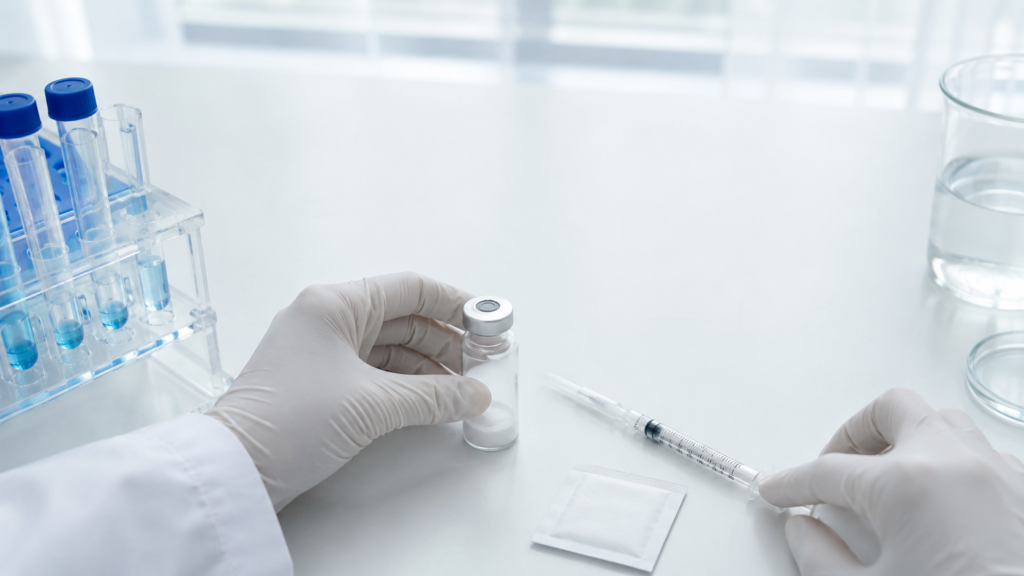
- Properly lyophilized appearance — clean white cake at the bottom of the vial
- Research-use-only labeling — required by US regulations
At OPS Peptide Science, every Selank and Semax vial ships with a unique BIOVIRIDIAN COA code. Customers can verify the Certificate of Analysis for their specific lot — confirming purity and identity before opening the vial.
Regulatory Status
Selank and Semax sit in similar regulatory positions in the US:
- Not FDA-approved — neither compound has completed US clinical trials for drug approval
- Approved in Russia for therapeutic use — Semax for stroke and cognitive indications; Selank for anxiety
- Legal as research chemicals in the US — sold under research-use-only labeling for in-vitro and animal research
- Not WADA-prohibited — as of current updates, neither compound is on the WADA Prohibited List
- Not DEA-scheduled — no controlled substance status
The Russian clinical-use approval provides more documented human research data than most non-FDA-approved peptides — useful for research methodology references — but does not change the US regulatory status. For the complete legal framework, see our detailed guide on are peptides illegal. According to NIH research literature, both compounds remain active research areas, particularly in neuropeptide and cognitive research contexts.
FAQ
What is the difference between Selank and Semax?
Both are seven-amino-acid Russian-developed neuropeptides. Selank is derived from tuftsin and focuses on anxiolytic and immune research. Semax is derived from ACTH(4-10) and focuses on cognitive enhancement and neuroprotection research. They act on different neurotransmitter systems and have complementary research applications.
Why are Selank and Semax administered intranasally?
The intranasal route delivers the peptide directly to brain tissue through the nasal mucosa, bypassing systemic circulation for much of the dose. This is particularly important for CNS-active peptides because peptides crossing the blood-brain barrier from systemic circulation typically have very low brain bioavailability. Intranasal administration produces measurable brain tissue concentrations that systemic administration cannot match.
Can Selank and Semax be combined?
Yes — combination research is documented in the literature. The two compounds address complementary research endpoints (anxiety + cognition) and act on different neurotransmitter systems with minimal overlap. Combined research protocols typically administer both compounds via the same route (intranasal or subcutaneous) on synchronized dosing schedules.
Are Selank and Semax FDA-approved?
No — neither compound is FDA-approved in the United States. Both have therapeutic approval in Russia (Semax for stroke and cognitive indications, Selank for anxiety) but this does not extend to US approval. In the US, both are sold legally as research chemicals under research-use-only labeling.
How long do Selank and Semax take to show effects in research?
Acute effects appear within hours of administration in research models — both compounds show measurable behavioral and biomarker effects within the first day of dosing. Cumulative effects on BDNF/NGF expression and structural brain endpoints develop over 1-4 weeks of consistent dosing protocols.
Are Selank and Semax legal in the US?
Yes — both are legally sold in the US as research chemicals under research-use-only labeling for in-vitro and animal research. Neither is FDA-approved for human use, and neither is currently on the WADA Prohibited List. See our detailed guide on are peptides illegal for the full framework.
Where can I buy research-grade Selank and Semax?
Research-grade Selank and Semax are sold by research peptide suppliers operating under research-use-only labeling. Quality criteria include 99%+ HPLC-MS verified purity for each compound, per-lot Certificates of Analysis, mass spectrometry identity confirmation, and traceable chain-of-custody. Browse the OPS Peptide Science catalog for verified research-grade Selank and Semax.
Selank and Semax stand as the most-studied cognitive peptide stack in modern research — small Russian-developed neuropeptides with distinct but complementary research applications spanning anxiety, cognition, neuroprotection, and aging-related cognitive endpoints. For researchers studying CNS biology, BDNF/NGF pathways, or broad cognitive function, this stack remains one of the most-cited combinations in the modern research catalog.
For research-grade Selank and Semax backed by per-lot Certificates of Analysis and full HPLC-MS purity documentation, browse the OPS Peptide Science catalog, visit the OPS Peptide Science homepage for the full product overview, or verify a specific lot using its COA code.
Author: Shane Straight, Principal Chemist, OPS Peptide Science
Reviewed: May 2026