Peptide Education, Product Pillars, Research Protocols
Epitalon: Complete Research Guide to the Telomerase Peptide

Jun
Research Use Only Notice: Epitalon is a research peptide intended for in-vitro and animal research applications only. It is not FDA-approved as a drug or therapy. Nothing in this article constitutes medical advice, treatment recommendation, or guidance for human consumption.
Epitalon is a four-amino-acid synthetic peptide that has become the most cited research compound in telomere biology and pineal gland aging research. Developed from research on pineal gland extracts (epithalamin), Epitalon has been the focal compound of Russian longevity research programs for decades and is increasingly studied by Western research groups. Published literature documents Epitalon’s effects on telomerase activation, telomere length, melatonin restoration, and lifespan extension across multiple animal aging models. This complete guide from the chemistry team at OPS Peptide Science walks through what Epitalon is, how the pineal and telomere mechanisms work, and where it sits in the broader longevity peptide catalog.
For the foundational research-workflow protocols, see our companion guides on how to reconstitute peptides, how to inject peptides, and peptide storage and refrigeration.
What Is Epitalon?
Epitalon is a synthetic peptide derived from research on epithalamin — a complex peptide extract from bovine pineal glands. Russian research programs identified the active four-amino-acid sequence within epithalamin and synthesized it as a discrete compound, naming it Epitalon. The compound has been studied primarily through Russian and Ukrainian research programs spanning several decades, with growing international research interest.
Key facts about Epitalon:
- Chemical class — 4-amino-acid synthetic peptide (tetrapeptide)
- Molecular weight — approximately 390 Da
- Sequence — Ala-Glu-Asp-Gly (AEDG)
- Half-life — short, approximately 30 minutes
- Form — typically supplied as lyophilized powder; reconstituted with bacteriostatic water
- Origin — Russian longevity research programs, primarily Vladimir Khavinson’s lab at St. Petersburg Institute of Bioregulation and Gerontology
- Research focus — telomere biology, pineal gland aging, melatonin regulation, lifespan research
Epitalon’s small size and simple sequence belie its research interest — much of modern peptide longevity research has been built around questions raised by Russian Epitalon studies. The compound has become a focal point in telomere biology research because it is one of the few small peptides documented to influence telomerase activity in research models.
Epitalon Structure and Chemistry
Epitalon’s structure is remarkably simple by peptide research standards:
- Only four amino acids — alanine, glutamic acid, aspartic acid, glycine in sequence
- Acidic character — two acidic residues (glutamic and aspartic acid) give the peptide a negative charge at physiological pH
- No modifications — no acetylation, no fatty acid chains, no D-amino acids; the peptide is the natural sequence with no engineering for stability
- Highly water-soluble — the small size and acidic residues make Epitalon readily soluble in aqueous solutions
The simplicity of Epitalon’s structure is part of why it has been so widely studied — it is straightforward to synthesize, easy to handle in laboratory contexts, and stable enough for reliable research protocols. The downside is the short half-life — without stability modifications, Epitalon clears rapidly from circulation, requiring frequent dosing in research protocols.
How Epitalon Works in Research (Mechanism)
Epitalon’s mechanism is unusual for a research peptide — it doesn’t bind a known cell-surface receptor in the way most peptides do. Instead, research has documented effects through several converging pathways:
- Telomerase activation — published research documents Epitalon-induced telomerase enzyme activity in cell culture studies, with downstream effects on telomere length
- Pineal gland modulation — research suggests Epitalon acts as a peptide regulator of pineal gland function, affecting melatonin synthesis patterns
- Gene expression effects — research has documented Epitalon modulation of genes involved in aging biology, telomere maintenance, and circadian regulation
- Direct DNA-binding hypothesis — some research proposes that small peptides like Epitalon may interact directly with regulatory DNA regions, though this mechanism remains debated
- Antioxidant pathway engagement — research models have documented Epitalon effects on oxidative stress markers
The mechanism is incompletely characterized compared to many other research peptides. Russian research has documented effects more extensively than Western research has reproduced — though Western studies have confirmed portions of the findings, particularly on telomerase activity and gene expression in cell culture. The published Epitalon research literature on PubMed includes both the original Russian research base and growing international replications.
Epitalon Research Applications
Telomere Biology Research
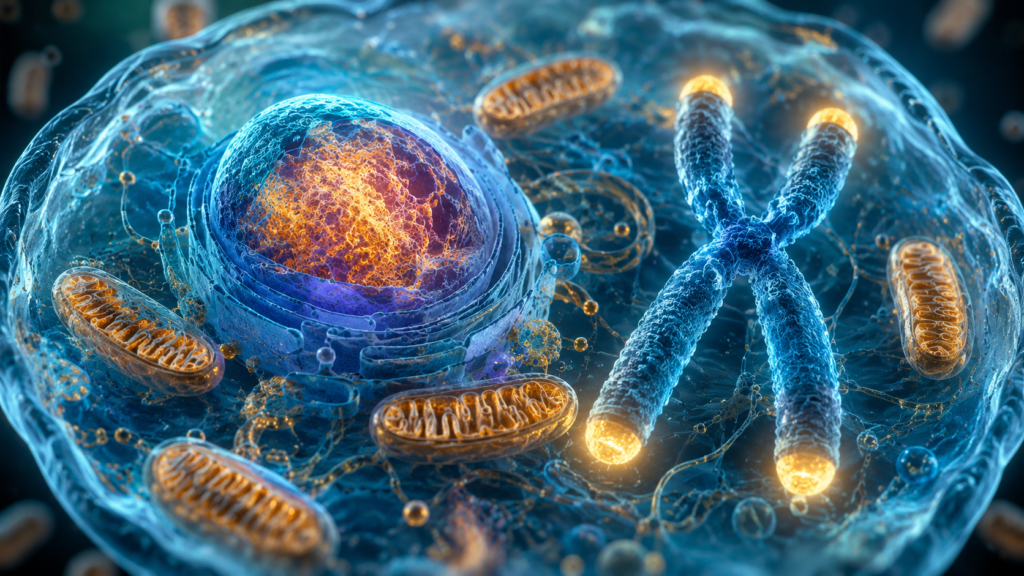
The largest body of Epitalon research focuses on telomere biology — the protective caps at the ends of chromosomes that shorten with cell division and aging. Telomere shortening is a hallmark of cellular senescence and an established biomarker of biological aging. Epitalon’s documented effects on telomerase activity and telomere length make it a primary research tool in this area.
Pineal Gland & Melatonin Research
The pineal gland produces melatonin and regulates circadian biology. Pineal function declines with age, reflected in disrupted melatonin rhythms in older subjects. Research has documented Epitalon effects on restored melatonin patterns in aging research models.
Circadian Biology Research
Connected to the pineal mechanism, Epitalon research extends into circadian rhythm research — sleep-wake cycle regulation, seasonal biology, and circadian gene expression. Research has measured Epitalon effects on circadian markers in animal models.
Lifespan Research
Russian research has documented Epitalon-induced lifespan extension in animal aging models — rodents and other species. While these findings remain under continued investigation in Western research programs, they have positioned Epitalon as one of the few research peptides with published lifespan-extension data in animal studies.
Antioxidant Research
Research has measured Epitalon effects on cellular oxidative stress markers — reactive oxygen species levels, antioxidant enzyme activity, and lipid peroxidation. These effects connect Epitalon biology to broader aging research where oxidative damage accumulates with age.
Visual System Research
A smaller but documented research area on Epitalon effects in retinal biology, including age-related visual decline research models. The pineal-retinal connection through circadian biology provides the mechanistic basis for this research.
The Russian Research Heritage
Most of the Epitalon research base originates from Russian and Soviet-era research programs, particularly the work of Vladimir Khavinson at the St. Petersburg Institute of Bioregulation and Gerontology. Key features of this research heritage:
- Multi-decade research timeline — research spans from the 1970s pineal extract research through modern synthetic Epitalon studies
- Large clinical research base — Russian clinical research has included hundreds of participants across various indications
- Multiple aging models — research extends across rodent species, including longevity studies
- Integration with broader peptide bioregulator research — Khavinson’s lab has studied dozens of short regulatory peptides; Epitalon is one of the most-studied of these
Western research has been slower to reproduce some of the Russian findings, partly due to language barriers and partly due to differences in research priorities. Modern Western research has been replicating portions of the findings — particularly on telomerase activity and gene expression — building a more globally distributed research base. The NIH research literature increasingly documents Epitalon studies as Western interest grows.
Epitalon vs Other Longevity Peptides
Brief comparison to other longevity research peptides:
| Peptide | Primary Mechanism | Research Focus |
|---|---|---|
| Epitalon | Telomerase activation, pineal modulation | Telomere biology, lifespan, melatonin |
| MOTS-c | AMPK activation, mitochondrial-encoded | Metabolic, insulin sensitivity |
| SS-31 | Cardiolipin binding, mitochondrial | Cardiac, neurodegeneration |
| GHK-Cu | Multi-pathway gene expression | Skin biology, broad aging |
Each compound addresses different aspects of aging biology. Epitalon’s unique position is in telomere and pineal research — areas where few other research peptides have meaningful published activity. Research designs studying broad longevity often combine multiple compounds to address different aging mechanisms.
Epitalon Dosing in Research Models
Research dosing of Epitalon follows patterns established in the Russian research literature:
- Subcutaneous administration — standard route in animal research
- Daily or twice-daily dosing — the short 30-minute half-life supports frequent administration
- Cycle-based protocols — 10-20 day cycles followed by washout periods are common in published research; some protocols use longer continuous dosing periods
- Dose amounts — typically reported in mg per dose in clinical research; animal research uses mg/kg ranges
- Study duration — many published Russian studies extend over months or years to capture lifespan and aging-related endpoints
Research protocols should reference published methodology for the specific research model. The cycle-based dosing pattern is particularly characteristic of Epitalon research — distinct from continuous dosing protocols used for many other research peptides.
Storage and Stability
Epitalon stability follows standard small-peptide patterns:
| Storage Condition | Form | Stability Window |
|---|---|---|
| -80°C | Lyophilized powder | 3-5+ years |
| -20°C | Lyophilized powder | 18-24 months |
| 2-8°C | Lyophilized powder | 6-12 months |
| 2-8°C | Reconstituted in BAC water | 21-28 days |
| Room temperature | Lyophilized powder | 2-4 weeks for transit |
For practical storage protocols, see our companion guide on how long do peptides last at room temperature.
How to Identify Quality Research-Grade Epitalon
Epitalon’s small size and simple sequence make it relatively straightforward to synthesize cleanly. Quality criteria:
- 99%+ HPLC-MS verified purity — the simple structure should produce very clean synthesis with high purity
- Per-lot Certificate of Analysis — each batch independently tested
- Mass spectrometry identity confirmation — confirms molecular weight matches Epitalon (~390 Da)
- Amino acid sequence verification — confirms AEDG sequence is correct
- Chain-of-custody documentation — traceable from manufacturer through fulfillment
- Properly lyophilized appearance — clean white cake at the bottom of the vial
- Research-use-only labeling — required by US regulations
At OPS Peptide Science, every Epitalon vial ships with a unique BIOVIRIDIAN COA code. Customers can verify the Certificate of Analysis for their specific lot — confirming purity and identity before opening the vial.
Regulatory Status
- Not FDA-approved — Epitalon has not completed US clinical trials for drug approval
- Research-use only in the US — sold under research-use-only labeling for in-vitro and animal research
- Used in Russian clinical research — substantial Russian clinical literature, though not US-approved
- Not WADA-prohibited as of current updates
- Not DEA-scheduled — no controlled substance status
For the complete legal framework around research peptides like Epitalon, see our detailed guide on are peptides illegal.
FAQ
What is Epitalon?
Epitalon is a four-amino-acid synthetic peptide (sequence Ala-Glu-Asp-Gly) derived from research on pineal gland extracts. It is the most-studied peptide in telomerase and telomere biology research, with documented effects on telomere length, pineal function, melatonin regulation, and lifespan in animal aging models.
Does Epitalon really lengthen telomeres?
Research has documented Epitalon activating telomerase in cell culture studies, with downstream effects on telomere length in some animal research models. The findings are most robust in cell culture; animal research data is more variable. Whether the effects translate to broader aging biology remains an active research question — the cell-level mechanism is established, but the systemic implications are still being characterized.
Is Epitalon FDA-approved?
No. Epitalon has not completed US clinical trials for drug approval. It is legally sold in the US as a research chemical for in-vitro and animal research under research-use-only labeling.
How is Epitalon dosed in research?
Research dosing varies by study design. Common patterns include subcutaneous administration, daily or twice-daily dosing (due to the short half-life), and cycle-based protocols of 10-20 days on followed by washout periods. Specific dosing should reference published methodology for the research model being used.
What’s the difference between Epitalon and other longevity peptides?
Epitalon’s primary research focus is telomere and pineal biology — areas where few other peptides have documented activity. MOTS-c addresses metabolic and insulin sensitivity. SS-31 addresses mitochondrial structure. GHK-Cu addresses skin and broad gene expression. Each compound addresses different aspects of aging biology, and many research designs combine compounds to cover multiple mechanisms.
Why is most Epitalon research Russian?
The compound was developed in Russian research programs, particularly Vladimir Khavinson’s lab in St. Petersburg. Decades of Russian research built the original literature base. Western research has been replicating portions of the findings as international interest grows, particularly on telomerase activity and gene expression mechanisms.
Where can I buy research-grade Epitalon?
Research-grade Epitalon is sold by research peptide suppliers operating under research-use-only labeling. Quality criteria include 99%+ HPLC-MS verified purity, per-lot Certificates of Analysis, mass spectrometry identity confirmation, and sequence verification. Browse the OPS Peptide Science catalog for verified research-grade Epitalon.
Epitalon occupies a unique position in the longevity peptide catalog — a small synthetic compound with substantial Russian research history and growing Western research interest. The combination of telomerase activity, pineal modulation, and documented lifespan effects in animal models makes Epitalon one of the most-cited research peptides in telomere biology and pineal aging research. For researchers studying telomere length, melatonin biology, or broad longevity endpoints, Epitalon remains a key compound in the modern research catalog.
For research-grade Epitalon backed by per-lot Certificates of Analysis and full HPLC-MS purity documentation, browse the OPS Peptide Science catalog, visit the OPS Peptide Science homepage for the full product overview, or verify a specific lot using its COA code.
Author: Shane Straight, Principal Chemist, OPS Peptide Science
Reviewed: Feb 2026