
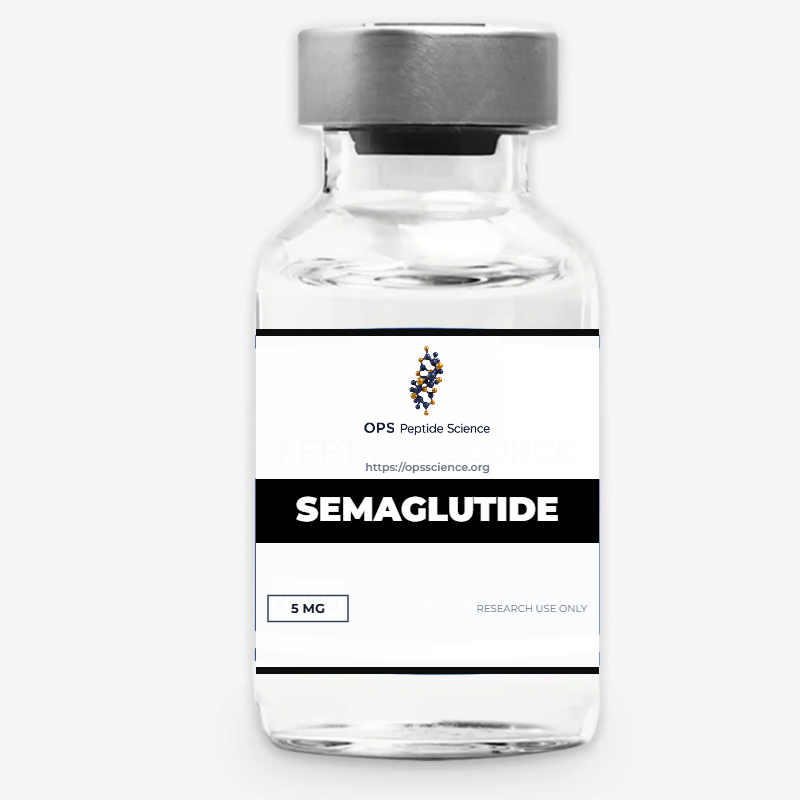
Semaglutide
Price range: $55.00 through $140.00
Semaglutide has done something few medications ever achieve: it has changed the cultural conversation around obesity, metabolic disease, and even addiction. With FDA approval, multibillion-dollar adoption, landmark clinical trials, and expanding indications, semaglutide stands as the most clinically important peptide of the modern era.
Semaglutide
Semaglutide is a synthetic peptide that mimics a naturally occurring hormone called glucagon-like peptide-1 (GLP-1) — a gut-derived hormone that plays a central role in regulating blood sugar, appetite, and digestion. Developed by Novo Nordisk and approved by the FDA in 2017 for type 2 diabetes and in 2021 for chronic weight management, semaglutide has become one of the most prescribed medications in the world, fundamentally reshaping how modern medicine approaches obesity and metabolic disease.
Marketed under the brand names Ozempic (for diabetes), Wegovy (for weight management), and Rybelsus (oral form), semaglutide has triggered what many in the medical community call the “GLP-1 revolution” — a paradigm shift in how metabolic conditions are treated. Its success has spawned a new generation of GLP-1-based therapies and made peptide medicine a household conversation in 2026.
How Semaglutide Works: Mechanism of Action
Semaglutide produces its powerful effects through several interconnected biological pathways:
- GLP-1 receptor agonism: Semaglutide binds to and activates GLP-1 receptors throughout the body, mimicking the natural hormone but with a much longer half-life.
- Appetite suppression: It signals the brain — particularly the hypothalamus — to reduce hunger and increase satiety, leading to reduced food intake.
- Delayed gastric emptying: Food stays in the stomach longer, increasing fullness and reducing post-meal blood sugar spikes.
- Improved insulin secretion: It stimulates insulin release when blood sugar is elevated, without causing dangerous lows.
- Glucagon suppression: It reduces glucagon, a hormone that raises blood sugar.
- Cardiovascular protection: Research has shown semaglutide reduces major adverse cardiovascular events in high-risk patients.
- Neuroprotective and anti-inflammatory effects: Emerging studies suggest broader systemic benefits beyond metabolic health.
This multi-pathway action is why semaglutide has been so transformative — it doesn’t just treat one symptom; it addresses the underlying drivers of metabolic dysfunction.
Top Benefits of Semaglutide
Semaglutide delivers a wide and well-documented range of benefits backed by years of large-scale clinical trials:
- Significant weight loss — typically 15–18% body weight reduction over 68 weeks in clinical studies.
- Improved blood sugar control — substantial HbA1c reductions in type 2 diabetes patients.
- Reduced cardiovascular events — fewer heart attacks, strokes, and cardiovascular deaths in at-risk populations.
- Lower blood pressure — modest but meaningful reductions.
- Improved cholesterol profile — better triglycerides and lipid markers.
- Reduced visceral fat — alongside total weight loss.
- Potential cognitive benefits — emerging research on Alzheimer’s prevention, with major trial results highly anticipated in 2026.
- Reduced addictive behaviors — promising data on alcohol use disorder and other addictions.
- Improved fatty liver disease markers — beneficial effects on NAFLD and NASH.
Semaglutide for Weight Loss: The Wegovy Revolution
Semaglutide’s weight loss results have been nothing short of revolutionary. In the landmark STEP trials, patients on Wegovy (semaglutide 2.4 mg) lost an average of 15% of their body weight — a level of fat loss previously achievable only through bariatric surgery. This breakthrough has changed how obesity is viewed clinically: not as a willpower issue, but as a biological condition that responds remarkably well to targeted pharmacological intervention.
Today, Wegovy is one of the most-requested medications in the world, with both medical clinics and direct-to-consumer telehealth platforms making it widely accessible.
Semaglutide for Type 2 Diabetes: The Ozempic Story
Semaglutide’s original FDA-approved indication is type 2 diabetes, where it has reshaped treatment standards. As Ozempic, it offers:
- Substantial HbA1c reductions
- Weight loss as a beneficial side effect
- Once-weekly injection convenience
- Cardiovascular protection in high-risk patients
This combination of glucose control, weight loss, and heart protection makes Ozempic one of the most powerful tools in modern diabetes care.
Semaglutide and Cardiovascular Health
The SELECT trial demonstrated that semaglutide reduces the risk of major adverse cardiovascular events (MACE) by approximately 20% in patients with obesity and established cardiovascular disease. This has elevated semaglutide from a metabolic medication to a cardiovascular prevention tool — a remarkable expansion of its clinical relevance.
Semaglutide and Emerging Applications
Beyond its established uses, semaglutide is being studied for an extraordinary range of additional applications:
- Alzheimer’s disease — two large trials with major readouts anticipated.
- Addiction medicine — promising results in alcohol use disorder, nicotine, and opioid dependence.
- Polycystic Ovary Syndrome (PCOS) — favorable effects on insulin resistance and weight.
- Sleep apnea — significant improvements through weight reduction.
- Migraine — early evidence of preventive benefits.
- Chronic kidney disease — protective effects in high-risk populations.
This expanding portfolio of potential uses has made semaglutide one of the most clinically studied peptides ever developed.
Semaglutide Research and Clinical Evidence
Semaglutide sits at the highest possible evidence tier — FDA-approved with extensive Phase 3 and Phase 4 trial data. It has been studied in tens of thousands of patients across dozens of major clinical trials, including landmark studies like STEP, SUSTAIN, PIONEER, and SELECT. Few peptides — or medications of any kind — have a comparable evidence base. This rigorous scientific foundation is a key reason for its rapid adoption and trusted clinical status.
Semaglutide Side Effects and Safety Profile
Semaglutide is generally well-tolerated, but it does have a notable side-effect profile:
- Gastrointestinal side effects are most common: nausea, vomiting, diarrhea, constipation, and bloating, especially during dose escalation.
- Acute phase GI effects lead to discontinuation in roughly 10% of users.
- Loss of muscle mass is a concern with rapid, large weight loss — making strength training and protein intake essential.
- Gallbladder issues — slightly increased risk of gallstones.
- Possible association with rare eye conditions is being investigated.
- Pancreatitis risk — low but non-zero.
- Thyroid C-cell tumor risk — observed in rodent studies; relevance to humans remains debated.
Most side effects are manageable with gradual dose titration, hydration, and dietary adjustments.
Regulatory Status: Is Semaglutide Legal in 2026?
Semaglutide is fully FDA-approved and one of the most prescribed medications in the world. It is available through standard pharmacies under the brand names Ozempic (diabetes), Wegovy (weight management), and Rybelsus (oral form). Compounded semaglutide became widely available during recent shortages, though regulatory tightening continues to evolve. WADA does not classify semaglutide as a prohibited substance for athletes as of 2026.
How Is Semaglutide Administered?
Semaglutide is most commonly administered via once-weekly subcutaneous injection, with dose titration over several months to minimize side effects. An oral form (Rybelsus) is also available, taken daily on an empty stomach. Specific dosing should always be guided by a qualified healthcare provider.
Semaglutide vs Other GLP-1 Peptides
How does semaglutide compare to other GLP-1 receptor agonists?
- Semaglutide vs Tirzepatide: Tirzepatide produces greater weight loss (~22% vs ~15%) but is newer with less long-term data.
- Semaglutide vs Liraglutide: Semaglutide is more potent, longer-acting, and produces greater weight loss than its predecessor.
- Semaglutide vs Retatrutide: Retatrutide is in Phase 3 trials and may produce even greater weight loss, but is not yet FDA-approved.
- Semaglutide vs Tesamorelin: Different mechanisms — semaglutide targets appetite and insulin; tesamorelin targets visceral fat through GH pathways.
Frequently Asked Questions About Semaglutide
Is Ozempic the same as Wegovy? Both are semaglutide. Ozempic is approved for type 2 diabetes, Wegovy for chronic weight management, and Rybelsus is the oral version.
How fast does semaglutide work? Appetite suppression is often noticed within days; meaningful weight loss typically emerges over 8–16 weeks, with full results often appearing at 12 months.
Will weight come back after stopping semaglutide? Yes — research shows substantial weight regain is common after discontinuation unless lifestyle changes are firmly established.
Can semaglutide be combined with strength training? Yes — strength training and adequate protein are highly recommended to preserve muscle mass during rapid weight loss.
Is semaglutide safe long-term? Long-term data continues to accumulate and so far supports a favorable safety profile, though continued monitoring is essential.
| Dosage | 10 mg, 15 mg, 20 mg, 30 mg, 5 mg |
|---|
Be the first to review “Semaglutide”
Related products
GH
Skin
Skin
GLP-1
Healing
GH
GH
Reviews
There are no reviews yet.