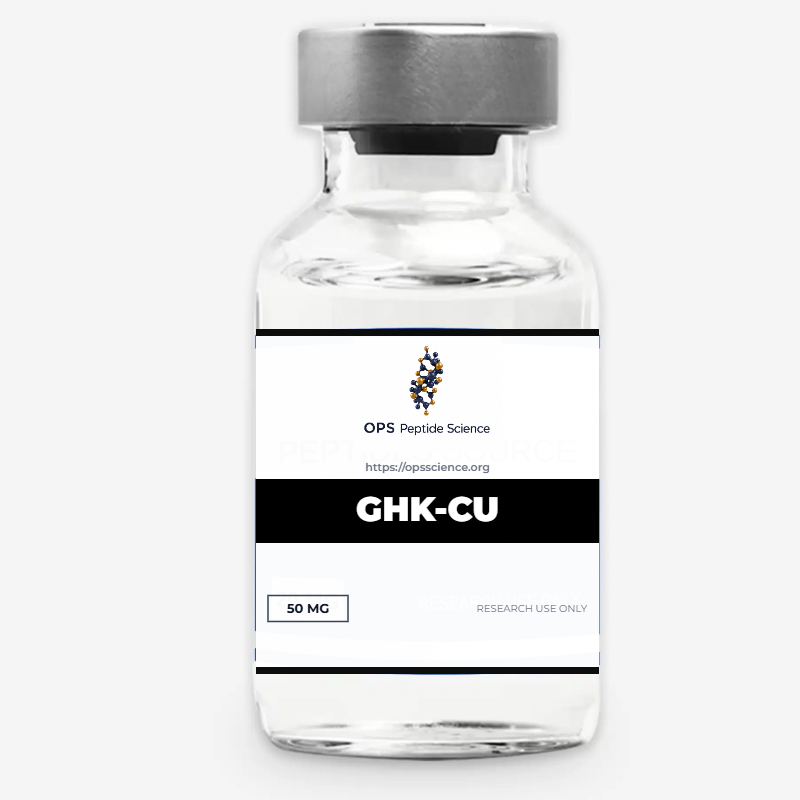
GHK-Cu
Price range: $50.00 through $70.00
GHK-Cu stands apart from the crowded peptide market thanks to its rare combination of deep scientific backing, broad regenerative action, and exceptional safety. Whether the goal is younger-looking skin, faster wound healing, or restored hair density, GHK-Cu has earned its place as one of the most trusted and effective anti-aging peptides available today.
GHK-Cu
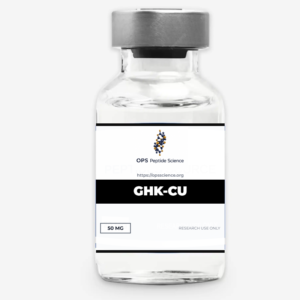
GHK-Cu — short for Glycyl-L-Histidyl-L-Lysine Copper Complex — is a naturally occurring tripeptide that binds with copper ions to form one of the most studied and respected anti-aging compounds in modern science. First discovered in human plasma in 1973, GHK-Cu levels naturally decline with age, dropping by more than half between our twenties and our sixties. This decline correlates with the visible signs of aging: thinning skin, slower wound healing, hair loss, and reduced tissue repair capacity.
Synthetic GHK-Cu replicates this natural molecule and has become a cornerstone ingredient in advanced skincare, regenerative medicine, hair restoration, and longevity protocols. Unlike most peptides on the market, GHK-Cu has been the subject of decades of peer-reviewed research, giving it one of the strongest evidence bases of any anti-aging compound available today.
How GHK-Cu Works: Mechanism of Action
GHK-Cu’s remarkable effects stem from its ability to act on multiple biological pathways simultaneously:
- Copper delivery: It safely transports copper ions into cells, supporting enzymes critical for collagen synthesis, antioxidant defense, and tissue repair.
- Collagen and elastin production: GHK-Cu stimulates fibroblast activity, increasing the production of structural proteins responsible for firm, youthful skin.
- Gene expression modulation: Research has shown GHK-Cu influences the expression of more than 4,000 human genes — most of them related to repair, regeneration, and longevity pathways.
- Antioxidant action: It neutralizes free radicals and reduces oxidative stress at the cellular level.
- Anti-inflammatory effects: GHK-Cu reduces pro-inflammatory cytokines, supporting healing without immunosuppression.
- Stem cell activation: Studies suggest GHK-Cu promotes the activity of skin and hair follicle stem cells.
This multi-pathway, gene-level activity is what makes GHK-Cu unique among peptides — it doesn’t just treat surface symptoms, it activates the body’s own regenerative blueprint.
Top Benefits of GHK-Cu
GHK-Cu has been studied for an exceptionally wide range of applications:
- Skin rejuvenation — improved firmness, elasticity, and tone.
- Wrinkle reduction — boosted collagen and elastin minimize fine lines.
- Wound healing — accelerated closure of cuts, burns, and surgical incisions.
- Hair regrowth — improved follicle health and reduced hair thinning.
- Scar reduction — softer, smoother scar tissue formation.
- Skin barrier repair — improved hydration and protection against environmental stressors.
- Anti-inflammatory effects — useful for eczema, rosacea, and irritated skin.
- DNA repair support — emerging evidence suggests genomic protective effects.
- Liver and lung tissue support — research demonstrates regenerative effects beyond skin.
GHK-Cu for Skincare: The Anti-Aging Gold Standard
GHK-Cu is widely regarded as one of the most effective anti-aging ingredients in modern dermatology. Clinical studies have shown that topical GHK-Cu can:
- Reduce the appearance of fine lines and wrinkles
- Improve skin firmness and density
- Increase skin thickness in aging individuals
- Reduce sun damage and pigmentation
- Enhance overall skin radiance and tone
Premium skincare brands now feature GHK-Cu in serums, eye creams, and post-procedure recovery formulas. Aesthetic clinics also use GHK-Cu in microneedling protocols and post-laser recovery treatments to accelerate healing and amplify results.
GHK-Cu for Hair Loss and Hair Regrowth
GHK-Cu has earned a strong reputation in the hair restoration community. Its ability to enlarge hair follicles, stimulate dermal papilla cells, and improve scalp circulation makes it a popular alternative or complement to minoxidil. Research suggests GHK-Cu may:
- Extend the anagen (growth) phase of the hair cycle
- Reduce hair miniaturization
- Improve hair thickness and density
- Promote new follicle activation
It’s commonly used in scalp serums, mesotherapy treatments, and at-home microneedling routines for hair regrowth.
GHK-Cu Research and Clinical Evidence
GHK-Cu sits in the strong preclinical and supportive clinical evidence tier. With over 50 years of research and hundreds of published studies, it has one of the most robust scientific foundations of any peptide in cosmetic and regenerative medicine. Its gene-modulating activity — affecting roughly one-third of the human genome in measurable ways — has positioned it as a serious anti-aging candidate beyond skincare alone.
GHK-Cu Side Effects and Safety Profile
GHK-Cu has one of the cleanest safety profiles of any peptide on the market, particularly when used topically. Reported side effects are typically limited to:
- Mild skin irritation in sensitive users
- Temporary redness or itching at application sites
- Rare allergic reactions
When used in injectable or compounded forms, additional caution is warranted, and medical supervision is recommended. Copper toxicity is theoretically possible at extreme overuse, though no cases have been reported with standard dosing.
Regulatory Status: Is GHK-Cu Legal in 2026?
GHK-Cu enjoys a unique regulatory position. As a cosmetic ingredient, it is widely available in skincare products around the world without restriction. As an injectable peptide, it falls into the same compounding pharmacy framework as other research peptides — meaning its availability depends on prescriber relationships and regional regulations. It is not currently on the FDA’s restricted Category 2 list, making it more accessible than peptides like BPC-157 and TB-500.
How Is GHK-Cu Administered?
GHK-Cu can be used through several routes depending on the application:
- Topical serums and creams — most common for skin rejuvenation
- Microneedling treatments — used clinically for amplified absorption
- Scalp solutions — for hair regrowth applications
- Subcutaneous injections — for systemic anti-aging benefits (under medical guidance)
Specific dosing and administration should always be determined by a qualified healthcare or dermatology provider.
GHK-Cu vs Other Anti-Aging Peptides
How does GHK-Cu compare to other popular anti-aging peptides like Matrixyl, Argireline, or Epitalon?
- GHK-Cu vs Matrixyl: GHK-Cu has stronger gene-modulating effects; Matrixyl is more focused on collagen signaling.
- GHK-Cu vs Argireline: Argireline acts like a “topical Botox” by relaxing facial muscles; GHK-Cu rebuilds skin from within.
- GHK-Cu vs Epitalon: Epitalon targets telomere biology and systemic aging; GHK-Cu targets tissue repair and skin regeneration.
Many advanced anti-aging protocols use these peptides together for layered effects.
Frequently Asked Questions About GHK-Cu
Is GHK-Cu safe for daily use? Yes — topical GHK-Cu is generally considered safe for daily skincare use.
How long until I see results from GHK-Cu? Most users see noticeable improvements within 4–12 weeks of consistent use.
Can GHK-Cu be combined with retinol or vitamin C? Yes, though some users prefer to alternate them to minimize potential irritation.
Is GHK-Cu vegan and cruelty-free? Synthetic GHK-Cu used in modern products is typically produced through lab synthesis and is suitable for vegan and cruelty-free formulations.
Does GHK-Cu work for men too? Absolutely. GHK-Cu is effective for both men and women, particularly for skin firmness and hair density.
| Dosage | 100 mg, 50 mg |
|---|
Be the first to review “GHK-Cu”
Related products
Healing
Healing
Reviews
There are no reviews yet.