
You must have an order with a minimum of $150.00 to place your order, your current order total is $0.00.
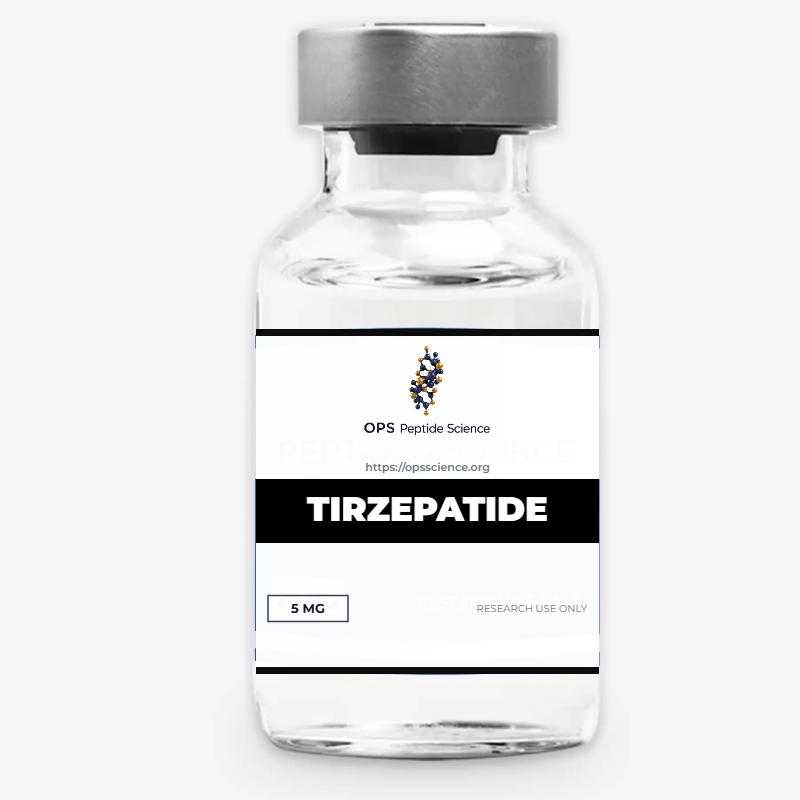
Tirzepatide
Price range: $55.00 through $240.00
Tirzepatide has redefined what’s possible in metabolic medicine. With FDA approval across three major indications, the strongest weight loss results ever recorded in non-surgical trials, and a rapidly expanding research portfolio, tirzepatide stands as one of the most clinically powerful peptides in modern medicine.
Tirzepatide
Tirzepatide is a synthetic peptide that represents a major evolutionary leap in metabolic medicine. Unlike semaglutide, which targets a single hormonal pathway, tirzepatide is a dual receptor agonist — meaning it activates two incretin hormones simultaneously: GLP-1 (glucagon-like peptide-1) and GIP (glucose-dependent insulinotropic polypeptide).
Developed by Eli Lilly and approved by the FDA in 2022 for type 2 diabetes under the brand name Mounjaro, and again in 2023 for chronic weight management under the brand name Zepbound, tirzepatide has redefined what’s pharmacologically possible in weight loss medicine. With clinical trial results showing up to 22.5% body weight reduction — significantly more than semaglutide — tirzepatide has earned its reputation as the most powerful FDA-approved weight loss peptide currently available in 2026.
How Tirzepatide Works: Mechanism of Action
Tirzepatide’s effectiveness comes from its dual mechanism of action — engaging two complementary metabolic pathways at once:
- GLP-1 receptor activation: Like semaglutide, it suppresses appetite, slows gastric emptying, improves insulin secretion, and reduces glucagon.
- GIP receptor activation: This second pathway enhances insulin sensitivity, improves fat metabolism, and contributes to additional appetite regulation and energy expenditure.
- Synergistic effects: The two pathways amplify each other, producing greater overall benefits than either alone.
- Improved insulin sensitivity: Tirzepatide significantly improves how the body’s cells respond to insulin.
- Reduced lipogenesis: It alters fat storage signaling, promoting fat oxidation rather than accumulation.
- Lower glucagon levels: It reduces this counterregulatory hormone, helping control blood sugar.
This dual-incretin approach is what makes tirzepatide so uniquely powerful — it doesn’t just turn down hunger; it fundamentally rebalances the body’s metabolic signaling.
Top Benefits of Tirzepatide
Tirzepatide’s clinical results have been remarkable, offering an impressive range of benefits:
- Industry-leading weight loss — up to 22.5% body weight reduction in clinical trials.
- Superior diabetes control — significant HbA1c reductions, often greater than semaglutide.
- Improved insulin sensitivity — meaningful metabolic restoration.
- Reduced waist circumference — particularly visceral fat.
- Improved cholesterol and triglycerides — better cardiometabolic markers.
- Lower blood pressure — modest but meaningful reductions.
- Reduced inflammation markers — including hs-CRP.
- Potential cardiovascular protection — under ongoing investigation.
- Reduced sleep apnea severity — recently FDA-approved indication.
- Improvements in fatty liver markers — promising NAFLD research.
Tirzepatide for Weight Loss: The Zepbound Revolution
The clinical data behind Zepbound (tirzepatide) has been nothing short of historic. In the SURMOUNT-1 trial, participants on the highest dose lost an average of 22.5% of their body weight over 72 weeks. For comparison, semaglutide (Wegovy) typically produces 15% weight loss in similar timeframes. This makes tirzepatide the most effective non-surgical weight loss tool ever developed in modern medicine.
The dramatic results have made Zepbound one of the most in-demand medications in the world, often prescribed for patients with obesity or BMI over 27 with weight-related comorbidities.
Tirzepatide for Type 2 Diabetes: The Mounjaro Story
Tirzepatide’s original FDA-approved indication is type 2 diabetes, where it has reshaped treatment expectations. As Mounjaro, it delivers:
- HbA1c reductions often greater than 2%
- Substantial weight loss as a beneficial side effect
- Once-weekly injection convenience
- Improved insulin sensitivity
- Reduced reliance on insulin therapy in many cases
For patients with both diabetes and obesity — a combination affecting hundreds of millions globally — tirzepatide offers a single solution that addresses both conditions simultaneously.
Tirzepatide for Sleep Apnea: The Newest FDA Indication
In late 2024, tirzepatide received an additional FDA approval for the treatment of moderate to severe obstructive sleep apnea (OSA) in adults with obesity. Clinical trials demonstrated significant reductions in apnea-hypopnea index (AHI), positioning tirzepatide as the first FDA-approved medication for sleep apnea. This represents a major expansion of its clinical applications and underscores the broad metabolic reach of GLP-1/GIP agonism.
Tirzepatide and Emerging Applications
Tirzepatide is also being investigated for several additional indications:
- Heart failure with preserved ejection fraction (HFpEF) — promising trial data.
- Non-alcoholic steatohepatitis (NASH) — significant improvements in liver markers.
- Polycystic Ovary Syndrome (PCOS) — beneficial metabolic effects.
- Chronic kidney disease — protective effects under study.
- Alzheimer’s disease prevention — early-stage research.
- Addiction medicine — emerging interest in reducing cravings.
This expanding portfolio suggests tirzepatide may eventually rival semaglutide in clinical breadth, though much of the research is earlier in development.
Tirzepatide Research and Clinical Evidence
Tirzepatide sits at the highest evidence tier — FDA-approved with multiple Phase 3 trials. Major clinical programs include:
- SURPASS trials — diabetes outcomes
- SURMOUNT trials — weight management outcomes
- SURMOUNT-OSA — sleep apnea outcomes
- SUMMIT — heart failure outcomes
- SYNERGY-NASH — fatty liver outcomes
This rigorous, multi-trial evidence base places tirzepatide alongside semaglutide as one of the most extensively validated peptides in clinical medicine today.
Tirzepatide Side Effects and Safety Profile
Tirzepatide shares a side-effect profile broadly similar to semaglutide, with some differences in intensity:
- Gastrointestinal effects are most common: nausea, vomiting, diarrhea, constipation, and bloating, especially during dose escalation.
- Loss of muscle mass is a concern with rapid weight loss, making resistance training and protein intake essential.
- Gallbladder issues — slightly increased risk of gallstones.
- Pancreatitis — low but non-zero risk.
- Thyroid C-cell tumor risk — observed in rodent studies; relevance to humans remains debated.
- Hypoglycemia risk — generally low except when combined with insulin or sulfonylureas.
- Acute kidney injury — typically related to dehydration from severe GI side effects.
Most side effects are manageable through gradual dose titration, hydration, and supportive lifestyle adjustments.
Regulatory Status: Is Tirzepatide Legal in 2026?
Tirzepatide is fully FDA-approved and available through standard pharmacies under three primary brand names:
- Mounjaro — type 2 diabetes
- Zepbound — chronic weight management and obstructive sleep apnea
- Approved internationally under various brand names
Compounded versions briefly became available during shortages but have faced increasing regulatory tightening as branded supply has stabilized. WADA does not currently classify tirzepatide as a prohibited substance as of 2026.
How Is Tirzepatide Administered?
Tirzepatide is administered via once-weekly subcutaneous injection, with gradual dose titration over several months to minimize side effects. An oral version is currently in development. Specific dosing should always be guided by a qualified healthcare provider.
Tirzepatide vs Other Weight Loss Peptides
How does tirzepatide compare to other major weight loss peptides?
- Tirzepatide vs Semaglutide: Tirzepatide produces greater weight loss (~22% vs ~15%) due to its dual GLP-1/GIP action.
- Tirzepatide vs Retatrutide: Retatrutide (triple agonist) may produce even greater weight loss in early Phase 2 data (~24%) but is not yet FDA-approved.
- Tirzepatide vs Liraglutide: Tirzepatide is dramatically more effective and longer-acting.
- Tirzepatide vs Tesamorelin: Different mechanisms — tirzepatide targets appetite and insulin; tesamorelin targets visceral fat through GH pathways.
- Tirzepatide vs CagriSema: A Novo Nordisk Phase 3 candidate (semaglutide + cagrilintide); comparison still emerging.
Frequently Asked Questions About Tirzepatide
Is Mounjaro the same as Zepbound? Both are tirzepatide. Mounjaro is approved for type 2 diabetes, Zepbound for weight management and obstructive sleep apnea.
How fast does tirzepatide work? Appetite suppression often appears within days; meaningful weight loss typically emerges over 8–16 weeks, with maximum results often appearing at 12–18 months.
Is tirzepatide better than semaglutide? For weight loss, tirzepatide generally produces greater results. For some patients, semaglutide is preferred based on tolerability, cost, or insurance coverage.
Will weight come back after stopping tirzepatide? Yes — like semaglutide, significant weight regain is common after discontinuation unless lifestyle changes are firmly established.
Can tirzepatide be combined with strength training? Absolutely — strength training and adequate protein intake are essential to preserve muscle mass during rapid weight loss.
Is tirzepatide safe long-term? Ongoing trials continue to confirm a favorable long-term safety profile, with most concerns related to manageable GI effects and the importance of muscle preservation.
| Dosage | 10 mg, 15 mg, 20 mg, 30 mg, 40 mg, 5 mg, 50 mg, 60 mg |
|---|
Be the first to review “Tirzepatide”
Related products
Healing
Price range: $100.00 through $175.00
This product has multiple variants. The options may be chosen on the product page
GLP-1
Price range: $135.00 through $205.00
This product has multiple variants. The options may be chosen on the product page
Cognitive
Price range: $50.00 through $70.00
This product has multiple variants. The options may be chosen on the product page
Healing
Price range: $55.00 through $80.00
This product has multiple variants. The options may be chosen on the product page
Skin
Price range: $60.00 through $170.00
This product has multiple variants. The options may be chosen on the product page
GLP-1
Price range: $55.00 through $140.00
This product has multiple variants. The options may be chosen on the product page


Reviews
There are no reviews yet.