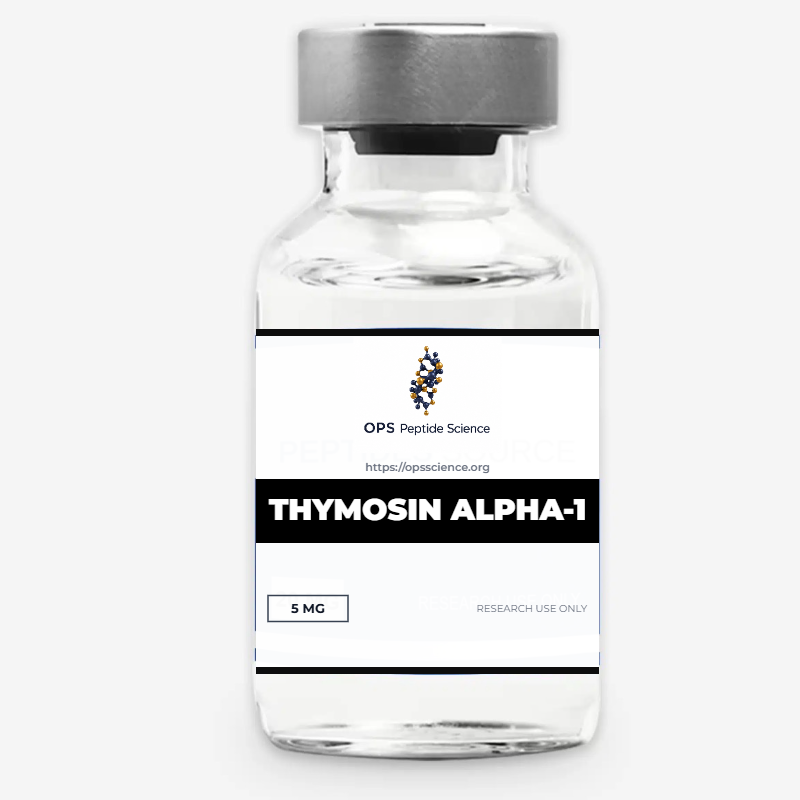
Thymosin Alpha-1
Price range: $105.00 through $200.00
Thymosin Alpha-1 stands out in the crowded peptide field thanks to its unique combination of deep clinical evidence, international approval, and broad therapeutic application. From cancer support to chronic viral infections to long COVID recovery, Tα1 represents one of the clearest examples of how peptide therapy can complement and amplify modern medicine.
Thymosin Alpha-1
Thymosin Alpha-1, often abbreviated as Tα1 or TA-1, is a naturally occurring 28-amino-acid peptide first isolated from the thymus gland in 1972. The thymus — a small but critical organ behind the breastbone — is the body’s central command center for immune cell training, particularly the development of T-cells. As the thymus shrinks with age, the body’s production of Thymosin Alpha-1 declines, and immune resilience weakens alongside it.
Synthetic Thymosin Alpha-1 (sold internationally under brand names like Zadaxin) replicates this natural peptide and has emerged as one of the most clinically validated immune-modulating peptides in the world. Approved or used in over 35 countries for conditions ranging from chronic hepatitis B and C to cancer adjuvant therapy and severe infections, Tα1 has earned a unique place in the peptide landscape: a compound with both deep scientific evidence and real-world clinical adoption.
How Thymosin Alpha-1 Works: Mechanism of Action
Thymosin Alpha-1 doesn’t simply “boost” the immune system — it modulates it, restoring balance and intelligence to immune responses. Its mechanisms include:
- T-cell maturation: Tα1 stimulates the differentiation of naive T-cells into mature, functional CD4+ and CD8+ T-cells, which are essential for fighting infections and tumors.
- Dendritic cell activation: It enhances the function of dendritic cells, which present antigens to other immune cells and trigger adaptive immune responses.
- Natural Killer (NK) cell stimulation: Tα1 increases NK cell activity, improving the body’s ability to destroy virus-infected and cancerous cells.
- Toll-like receptor signaling: It activates TLR pathways that help the immune system recognize and respond to pathogens.
- Cytokine balance: Tα1 promotes Th1 immune responses while reducing excessive inflammation — a critical balance in autoimmune and chronic inflammatory conditions.
- Antioxidant action: Research suggests Tα1 also reduces oxidative stress and supports cellular health.
This intelligent, balanced modulation is why Thymosin Alpha-1 has become a cornerstone in immunotherapy and integrative medicine.
Top Benefits of Thymosin Alpha-1
Thymosin Alpha-1 has been extensively researched and clinically applied for a remarkable range of health applications:
- Chronic viral infection support — particularly hepatitis B and hepatitis C.
- Cancer therapy adjuvant — used alongside chemotherapy and immunotherapy to improve outcomes.
- Sepsis and severe infection management — included in critical care protocols in several countries.
- Immune deficiency support — beneficial for those with weakened immune systems.
- Autoimmune condition modulation — helps balance overactive immune responses.
- Chronic fatigue and post-viral syndromes — emerging use in long COVID and similar conditions.
- Vaccine response enhancement — improves antibody production in elderly and immunocompromised individuals.
- Aging-related immune decline — helps restore immune function as the thymus atrophies.
- Lyme disease support — used in integrative medicine for chronic infections.
Thymosin Alpha-1 for Cancer Support
One of the most well-documented applications of Thymosin Alpha-1 is in oncology support. It has been studied in melanoma, hepatocellular carcinoma, non-small cell lung cancer, and other malignancies — often as an adjunct to standard treatments. Its ability to enhance T-cell and NK-cell activity makes it a valuable tool for amplifying the body’s own anti-tumor response, particularly when combined with checkpoint inhibitors and chemotherapy regimens.
Thymosin Alpha-1 for Viral Infections and Hepatitis
Tα1 has been used clinically for decades to treat chronic hepatitis B and C, with studies demonstrating improved viral clearance, normalized liver enzymes, and better long-term outcomes when combined with antiviral medications. Its role in supporting immune responses against persistent viral infections is one of its strongest evidence-based applications.
Thymosin Alpha-1 for Long COVID and Post-Viral Recovery
Since the pandemic, Thymosin Alpha-1 has gained renewed attention for its potential role in long COVID and other post-viral syndromes. Its immune-balancing effects may help address the dysregulated immune signatures often seen in these conditions, including chronic inflammation, T-cell exhaustion, and impaired viral clearance. While more research is needed, anecdotal and early clinical reports have been promising.
Thymosin Alpha-1 Research and Clinical Evidence
Thymosin Alpha-1 sits in a strong clinical evidence tier, with multiple Phase 2 and Phase 3 trials worldwide, decades of clinical use, and approval in numerous countries. It is one of the few peptides with both deep mechanistic understanding and a robust track record of real-world application in hospitals and clinics. In the United States, it is not yet FDA-approved but has been widely used through compounding pharmacies for off-label immune support.
Thymosin Alpha-1 Side Effects and Safety Profile
Thymosin Alpha-1 has an outstanding safety record across decades of clinical use. Reported side effects are typically mild and may include:
- Mild injection site irritation or redness
- Temporary fatigue
- Occasional headaches
- Rare allergic reactions
It is generally well-tolerated even in critically ill patients and elderly populations, which is part of why it has earned such widespread international acceptance.
Regulatory Status: Is Thymosin Alpha-1 Legal in 2026?
Thymosin Alpha-1 is approved or registered in more than 35 countries, including Italy, China, and many parts of Asia, Europe, and Latin America. In the United States, it was placed on the FDA Category 2 restricted list in 2023, halting compounding pharmacy preparation. As of 2026, it is among the seven peptides scheduled for review by the FDA Pharmacy Compounding Advisory Committee in July 2026, which may restore compounding eligibility. Its strong international approval record is a major argument cited by clinicians advocating for U.S. reinstatement.
How Is Thymosin Alpha-1 Administered?
Thymosin Alpha-1 is most commonly administered via subcutaneous injection, typically two to three times per week. Specific dosing depends on the condition being addressed and should always be determined by a qualified medical provider.
Thymosin Alpha-1 vs Other Immune Peptides
How does Tα1 compare to other immune-supportive peptides?
- Thymosin Alpha-1 vs Thymulin: Both come from thymus biology, but Tα1 has far more clinical data and a broader range of applications.
- Thymosin Alpha-1 vs LL-37: LL-37 is more antimicrobial in focus; Tα1 is broader immunomodulatory.
- Thymosin Alpha-1 vs TB-500 (Thymosin Beta-4): Despite the similar name, TB-500 is regenerative; Tα1 is immune-focused. They are sometimes stacked.
Frequently Asked Questions About Thymosin Alpha-1
Is Thymosin Alpha-1 a steroid or hormone? No. It is a peptide that modulates the immune system; it has no hormonal or anabolic effects.
How long does it take Thymosin Alpha-1 to work? Immune markers can begin shifting within weeks, but full benefits often emerge after 1–3 months of consistent use.
Can Thymosin Alpha-1 be used preventively? Yes — many integrative practitioners use it during high-risk seasons or for individuals with chronic immune challenges.
Is Thymosin Alpha-1 FDA-approved? Not in the U.S., though it is approved in many other countries. It is under FDA review for compounding eligibility in 2026.
Can Tα1 be combined with other peptides? Yes — it is commonly stacked with BPC-157, GHK-Cu, or growth hormone peptides as part of broader wellness protocols, under medical supervision.
| Dosage | 10 mg, 5 mg |
|---|
Be the first to review “Thymosin Alpha-1”
Related products
Immune
Healing
GLP-1
GLP-1
Immune
GLP-1
Reviews
There are no reviews yet.