
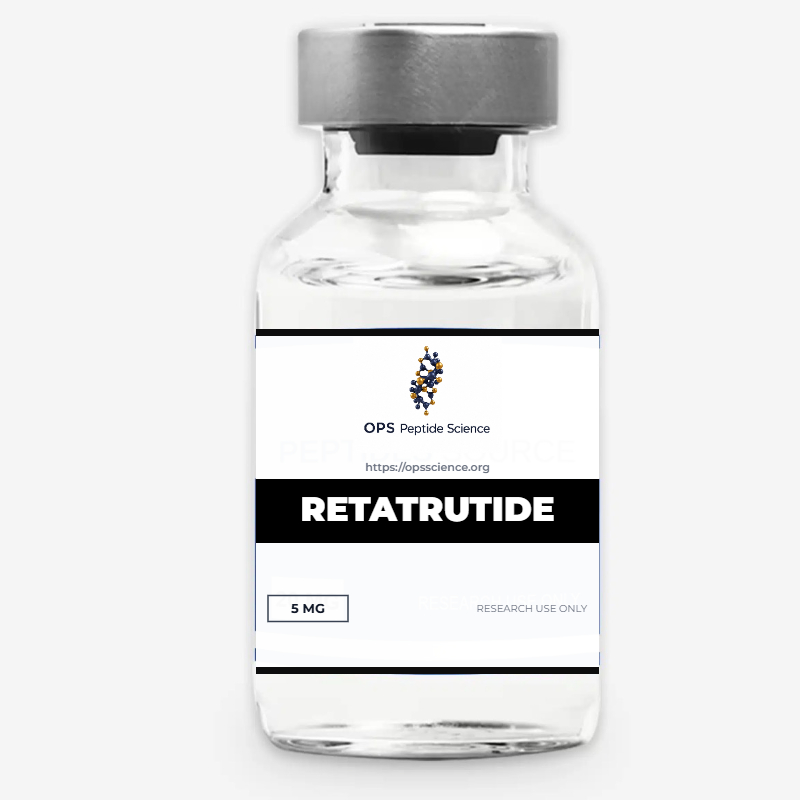
Retatrutide
Price range: $105.00 through $380.00
Retatrutide stands at the cutting edge of metabolic medicine. With its triple-agonist mechanism, record-breaking Phase 2 weight loss data, and ongoing Phase 3 trial program, it is widely anticipated to become the next major breakthrough in obesity treatment.
Retatrutide
Retatrutide is an experimental synthetic peptide developed by Eli Lilly that represents the most advanced evolution yet in metabolic and weight loss medicine. While semaglutide targets a single hormone (GLP-1) and tirzepatide targets two (GLP-1 and GIP), retatrutide goes one step further — acting as a triple agonist of three powerful incretin and metabolic pathways: GLP-1, GIP, and glucagon receptors.
This three-pathway approach is widely seen as the next major frontier in obesity and metabolic disease treatment. Early clinical trial results have been nothing short of remarkable: in Phase 2 studies, retatrutide produced up to 24.2% body weight reduction in 48 weeks, with continued downward weight trajectories at the end of the study — suggesting that the full peak effect may be even greater. As Phase 3 TRIUMPH trials progress in 2026, retatrutide is widely anticipated to become the most powerful FDA-approved weight loss peptide in history, with potential filing expected in 2026–2027.
How Retatrutide Works: Mechanism of Action
Retatrutide produces its powerful effects by engaging three complementary metabolic pathways simultaneously:
- GLP-1 receptor activation: Suppresses appetite, slows gastric emptying, improves insulin secretion, and reduces glucagon spikes after meals.
- GIP receptor activation: Enhances insulin sensitivity, improves fat metabolism, and supports additional appetite regulation.
- Glucagon receptor activation: This is the unique third pathway — it increases energy expenditure, boosts fat burning, and improves liver fat metabolism.
- Combined synergy: The three pathways amplify each other, creating effects far greater than any single mechanism could produce on its own.
- Metabolic rate elevation: Through glucagon activity, retatrutide actively increases the body’s energy expenditure — meaning it not only reduces calorie intake but also increases calorie burn.
This triple mechanism is what distinguishes retatrutide from its predecessors. Where semaglutide and tirzepatide primarily reduce intake, retatrutide reduces intake and increases output — fundamentally shifting the body’s metabolic balance in favor of fat loss.
Top Benefits of Retatrutide
Retatrutide’s expected benefits — based on Phase 2 data and ongoing Phase 3 trials — are impressive in both scope and magnitude:
- Record-breaking weight loss — up to 24.2% body weight reduction in Phase 2 trials.
- Significant reduction in visceral fat — particularly dangerous abdominal fat.
- Strong diabetes control — meaningful HbA1c reductions.
- Improved insulin sensitivity — broad metabolic restoration.
- Reduced liver fat — promising NAFLD and NASH applications.
- Improved cardiovascular markers — better lipids and blood pressure.
- Enhanced energy expenditure — through glucagon receptor activation.
- Improved obesity-related comorbidities — sleep apnea, joint pain, mobility.
- Continued weight loss trajectory — suggesting peak effects may exceed Phase 2 results.
Retatrutide for Weight Loss: The Next Big Leap
The clinical results for retatrutide have caused a stir in metabolic medicine. In the Phase 2 trial published in 2023, participants on the highest dose of retatrutide (12 mg) lost an average of 24.2% of their body weight in just 48 weeks — and notably, the weight loss curve had not plateaued at the end of the study. This suggests that longer treatment periods may produce even greater results, possibly approaching or exceeding bariatric surgery outcomes.
For context, semaglutide produces about 15% weight loss and tirzepatide about 22.5%. Retatrutide is on track to push this benchmark further, redefining what’s possible without surgery.
Retatrutide for Type 2 Diabetes
Retatrutide is also being investigated for type 2 diabetes management. Phase 2 data showed substantial HbA1c reductions alongside weight loss, suggesting it could become a powerful tool for patients with both conditions — a remarkably common combination affecting hundreds of millions globally.
The Phase 3 TRIUMPH trial program includes diabetes-focused studies, with multiple late-stage trials currently in progress.
Retatrutide for Fatty Liver Disease (NAFLD/NASH)
Because retatrutide engages the glucagon receptor, it has unique potential in non-alcoholic fatty liver disease (NAFLD) and non-alcoholic steatohepatitis (NASH) — conditions where liver fat accumulation drives chronic disease and even cirrhosis. Early data suggests retatrutide may dramatically reduce liver fat, positioning it as a potential breakthrough in hepatology as well as metabolic medicine.
Retatrutide Research and Clinical Evidence
Retatrutide currently sits in the Phase 3 evidence tier, with the major TRIUMPH clinical program still in progress as of 2026. The Phase 2 data has already generated significant excitement throughout the medical community, and major industry analysts widely anticipate filing for FDA approval in 2026–2027. If successful, retatrutide would become the first triple-agonist peptide approved for human use — a major scientific milestone.
The TRIUMPH program currently includes:
- TRIUMPH-1 — Obesity in adults
- TRIUMPH-2 — Obesity with type 2 diabetes
- TRIUMPH-3 — Obesity with cardiovascular disease
- TRIUMPH-4 — Obesity with knee osteoarthritis
Retatrutide Side Effects and Safety Profile
Based on Phase 2 results, retatrutide’s side-effect profile is broadly similar to other GLP-1 class peptides, with some unique considerations:
- Gastrointestinal side effects — nausea, vomiting, diarrhea, constipation, particularly during dose escalation.
- Increased heart rate — observed at higher doses in some trials.
- Mild blood sugar changes — both improvements and occasional fluctuations.
- Potential hepatic effects — being closely monitored given glucagon receptor activity.
- Loss of muscle mass — a concern with rapid weight loss, making strength training and protein intake critical.
- Gallbladder issues — similar low risk as other GLP-1s.
- Pancreatitis — low but non-zero risk.
So far, retatrutide appears to be reasonably well-tolerated at therapeutic doses, with most adverse events manageable through gradual titration and supportive care.
Regulatory Status: Is Retatrutide Legal in 2026?
Retatrutide is not yet FDA-approved. It remains an investigational compound undergoing Phase 3 clinical trials. Filing for FDA approval is anticipated between 2026 and 2027, with potential commercial availability shortly thereafter. Until then, retatrutide is not legally available through standard pharmacies, though research-grade versions may be accessible through specialized suppliers under strict research-only labeling.
Caution: Because retatrutide is investigational, anyone considering it through non-approved channels should understand the lack of FDA oversight, the absence of standardized dosing protocols, and the importance of medical supervision.
How Will Retatrutide Be Administered?
Retatrutide is expected to be administered via once-weekly subcutaneous injection, similar to semaglutide and tirzepatide. Phase 2 trials used dose escalation from 1 mg to 8–12 mg weekly over 24 weeks, with the highest doses producing the greatest weight loss results. Final dosing recommendations will be determined once Phase 3 trials are complete and regulatory submissions are finalized.
Retatrutide vs Other GLP-1 Peptides
How does retatrutide compare to the leading approved GLP-1 peptides?
- Retatrutide vs Tirzepatide: Retatrutide adds a third pathway (glucagon receptor) and shows greater weight loss in early trials, but is not yet approved.
- Retatrutide vs Semaglutide: Retatrutide is expected to produce roughly 50–60% more weight loss based on Phase 2 data.
- Retatrutide vs CagriSema: CagriSema (semaglutide + cagrilintide) is another Phase 3 contender; head-to-head data is not yet available.
- Retatrutide vs Bariatric Surgery: Final weight loss results may begin approaching surgical outcomes — a remarkable shift in clinical possibilities.
Frequently Asked Questions About Retatrutide
When will retatrutide be FDA-approved? Filing is expected in 2026–2027, with potential commercial availability shortly after, depending on FDA review timelines.
How fast does retatrutide work? Phase 2 trials showed appetite suppression within days and significant weight loss within 4–12 weeks, with continued progress over 48+ weeks.
Will retatrutide be better than tirzepatide? Phase 2 data suggests retatrutide produces greater weight loss; head-to-head trials and Phase 3 results will provide more definitive comparisons.
Is retatrutide safe? So far, trial data has shown a manageable safety profile, but as an investigational compound, long-term safety data is still being established.
Can retatrutide cure obesity? No medication “cures” obesity, but retatrutide represents one of the most powerful tools yet developed for managing it — particularly when combined with sustainable lifestyle changes.
| Dosage | 10 mg, 15 mg, 20 mg, 30 mg, 40 mg, 5 mg, 50 mg, 60 mg |
|---|
Be the first to review “Retatrutide”
Related products
Cognitive
Healing
GH
GH
Cognitive
Reviews
There are no reviews yet.