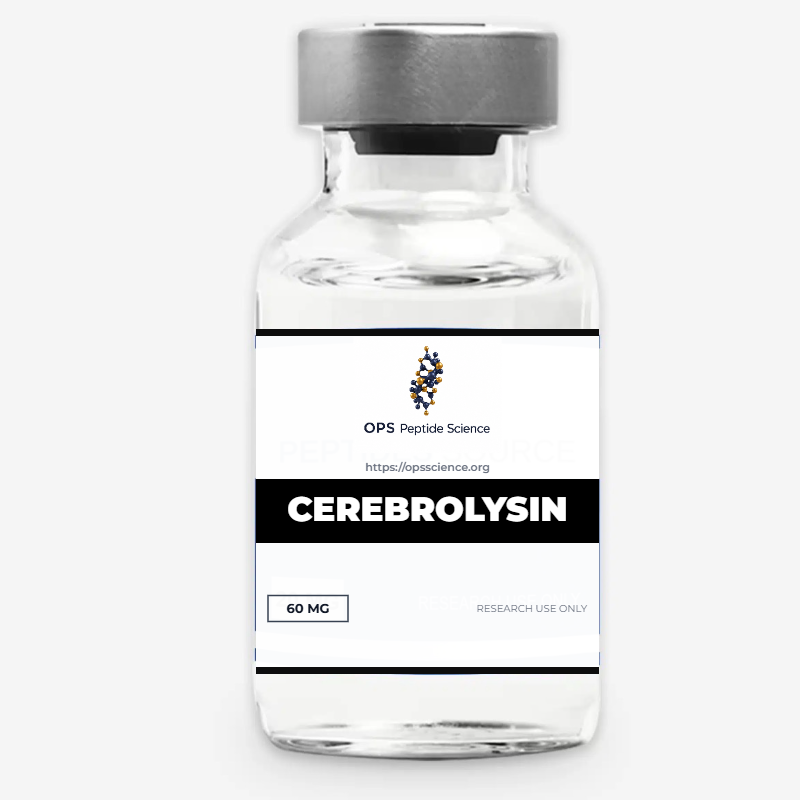
Cerebrolysin
$55.00
Cerebrolysin stands apart from nearly every other peptide on this list because of its unmatched combination of clinical legitimacy, broad neurological action, and decades of global use. With over 50 countries of regulatory approval, hundreds of clinical trials, and a complex, multi-target mechanism that mimics the body’s own neurotrophic systems, Cerebrolysin remains one of the most powerful tools available in modern neurology and brain health.
Cerebrolysin
Cerebrolysin is one of the most clinically established neuropeptide therapies in the world — though unlike most peptides on this list, it is not a single synthetic molecule. Instead, Cerebrolysin is a carefully purified complex of low-molecular-weight peptides and free amino acids derived from porcine (pig) brain tissue. Developed by Austrian pharmaceutical company Ever Neuro Pharma, Cerebrolysin has been used clinically for over four decades and is approved in more than 50 countries for conditions including stroke, dementia, traumatic brain injury, and cognitive impairment.
What makes Cerebrolysin so unique is that it mimics the natural neurotrophic factors the body produces to support brain growth, repair, and protection. By delivering a broad spectrum of brain-supportive peptides at once, Cerebrolysin offers a multi-target neurological intervention that few other compounds can match. In 2026, it remains one of the most respected and widely studied neuropeptides in global clinical medicine.
How Cerebrolysin Works: Mechanism of Action
Cerebrolysin produces its remarkable effects through several powerful neurobiological pathways:
- Neurotrophic factor mimicry: Cerebrolysin mimics the action of naturally occurring neurotrophic factors such as BDNF, NGF, GDNF, and CNTF — proteins essential for neuron survival, growth, and repair.
- Neuroprotection: It protects neurons from oxidative stress, excitotoxicity, and apoptotic (cell death) signaling — particularly important after stroke or injury.
- Neuroplasticity enhancement: Cerebrolysin promotes the brain’s ability to form new neural connections, supporting learning, memory, and recovery.
- Neurogenesis support: Emerging research suggests Cerebrolysin may support the growth of new neurons, particularly in the hippocampus.
- Anti-inflammatory action: It reduces neuroinflammation, which is increasingly recognized as a key driver of neurodegenerative disease.
- Improved cerebral metabolism: Cerebrolysin enhances brain energy metabolism, supporting cellular function and resilience.
- Synaptic regeneration: It supports the repair and growth of synapses, the critical connection points between neurons.
This multi-target, neurotrophic action is what makes Cerebrolysin uniquely powerful in the management of complex neurological conditions.
Top Benefits of Cerebrolysin
Cerebrolysin offers a wide range of neurological and cognitive benefits backed by decades of clinical research:
- Stroke recovery support — improved neurological function after ischemic stroke.
- Dementia and Alzheimer’s support — slower cognitive decline and improved daily function.
- Traumatic brain injury (TBI) recovery — better long-term outcomes after concussions and head injuries.
- Improved cognition — sharper memory, focus, and learning capacity.
- Mood support — improvements in depression and anxiety symptoms.
- Neuroprotection — reduced damage from oxidative stress and inflammation.
- Improved sleep quality — through balanced neurochemistry.
- Better outcomes in vascular dementia — particularly studied applications.
- Support in pediatric neurological conditions — including ADHD and autism in some clinical contexts.
- Anti-aging brain effects — through preserved neuroplasticity.
Cerebrolysin for Stroke Recovery
One of Cerebrolysin’s most clinically validated applications is stroke recovery. Multiple randomized controlled trials have shown that early administration after ischemic stroke can:
- Reduce neurological damage
- Improve motor and cognitive recovery
- Enhance overall functional independence
- Reduce post-stroke depression and cognitive decline
Cerebrolysin is part of standard stroke recovery protocols in many countries, particularly in Eastern Europe, Russia, and parts of Asia.
Cerebrolysin for Alzheimer’s and Dementia
Cerebrolysin has been studied extensively for Alzheimer’s disease and various forms of dementia, with notable clinical findings:
- Slower progression of cognitive decline
- Improvements in memory and executive function
- Better daily functional capacity
- Stabilization of mood and behavioral symptoms
- Improved quality of life for patients and caregivers
While not a cure for Alzheimer’s, Cerebrolysin remains one of the few therapies with consistent positive effects in these populations.
Cerebrolysin for Traumatic Brain Injury (TBI)
For patients recovering from traumatic brain injuries, including concussions, Cerebrolysin offers powerful supportive benefits. Clinical studies have shown improved outcomes in:
- Post-concussion syndrome
- Severe TBI recovery
- Long-term cognitive rehabilitation
- Mood and behavioral symptoms after injury
This makes Cerebrolysin particularly valuable in sports medicine, military medicine, and accident recovery contexts.
Cerebrolysin for Pediatric Neurological Conditions
In several countries, Cerebrolysin is also used in pediatric settings for:
- ADHD — supporting attention and behavior
- Autism spectrum support — improving cognitive and behavioral markers
- Cerebral palsy — supporting neurological development
- Developmental delays — improving cognitive and motor function
Its use in pediatric populations underscores its strong safety profile and broad neurological benefits.
Cerebrolysin and Cognitive Anti-Aging
Beyond clinical disease, Cerebrolysin has gained attention in the longevity and cognitive optimization community. By preserving neuroplasticity, supporting neurotrophic factors, and reducing neuroinflammation, it offers a powerful tool for those seeking to preserve cognitive function as they age. Many integrative practitioners now include Cerebrolysin in protocols designed to support cognitive resilience and prevent age-related decline.
Cerebrolysin Research and Clinical Evidence
Cerebrolysin sits in the highest clinical evidence tier of any peptide in this list, surpassed only by FDA-approved compounds like semaglutide and tirzepatide. Its clinical foundation includes:
- Over 200 published clinical trials
- More than 50 country approvals
- Decades of real-world clinical use
- Strong safety data across diverse populations
- Robust outcomes in stroke, dementia, and TBI
While not FDA-approved in the United States, its international clinical legitimacy is extensive.
Cerebrolysin Side Effects and Safety Profile
Cerebrolysin has a remarkably clean safety profile considering its long history of clinical use. Reported side effects are typically mild and may include:
- Mild dizziness or sweating
- Sensation of warmth after infusion
- Headache (rare)
- Mild gastrointestinal upset
- Injection site irritation
- Rare allergic reactions
Because it is porcine-derived, individuals with pork allergies should approach with extra caution and medical guidance. Medical supervision is essential, particularly given that Cerebrolysin is typically administered as a series of intravenous or intramuscular infusions.
Regulatory Status: Is Cerebrolysin Legal in 2026?
Cerebrolysin enjoys an unusually broad regulatory acceptance:
- Approved in over 50 countries — including most of Europe, Russia, China, parts of Asia, and Latin America.
- United States: Not FDA-approved. Available through specialized providers, integrative clinics, and select compounding networks.
- WADA: Cerebrolysin is generally permitted in competitive sports, though athletes should always verify with their sport’s governing body.
In 2026, Cerebrolysin remains one of the most globally accessible and clinically respected neuropeptides available.
How Is Cerebrolysin Administered?
Cerebrolysin is most commonly administered via intravenous (IV) infusion or intramuscular (IM) injection, typically in treatment courses of 10–30 days followed by rest periods. This structured approach mirrors how it is administered in international hospitals and integrative clinics. Specific dosing protocols should always be determined by a qualified healthcare provider.
Cerebrolysin vs Other Neuropeptides
How does Cerebrolysin compare to other brain-supportive peptides?
- Cerebrolysin vs Semax: Semax is a single, focused peptide producing fast cognitive effects; Cerebrolysin is broader, slower, and deeper in neurological action.
- Cerebrolysin vs Selank: Selank is anxiolytic and focused; Cerebrolysin is regenerative and broadly neuroprotective.
- Cerebrolysin vs Dihexa: Dihexa is highly synaptogenic and targeted at memory; Cerebrolysin is multi-target and clinically validated.
- Cerebrolysin vs NGF-based therapies: Cerebrolysin mimics NGF along with several other neurotrophic factors, giving it broader action.
- Cerebrolysin vs HGH/IGF-1 protocols: Different mechanisms — Cerebrolysin works directly on neurons; GH/IGF-1 work systemically and indirectly.
Frequently Asked Questions About Cerebrolysin
Is Cerebrolysin a single peptide? No — Cerebrolysin is a complex of multiple small peptides and amino acids derived from porcine brain tissue, designed to mimic naturally occurring neurotrophic factors.
How fast does Cerebrolysin work? Some users report improvements within days; full benefits typically emerge after a complete treatment course of 10–30 days.
Can Cerebrolysin be used preventively? Yes — many integrative practitioners use Cerebrolysin in long-term cognitive anti-aging and neuroprotection protocols.
Is Cerebrolysin safe long-term? With proper medical supervision and treatment cycling, Cerebrolysin has shown excellent long-term safety in decades of clinical use.
Is Cerebrolysin FDA-approved? Not in the U.S., but it is approved in more than 50 countries worldwide.
Can Cerebrolysin be combined with other peptides? Yes — it is often stacked with Semax, Selank, BPC-157, and others under medical supervision.
| Dosage | 60 mg |
|---|
Be the first to review “Cerebrolysin”
Related products
Cognitive
GH
GLP-1
Healing
Immune
Reviews
There are no reviews yet.