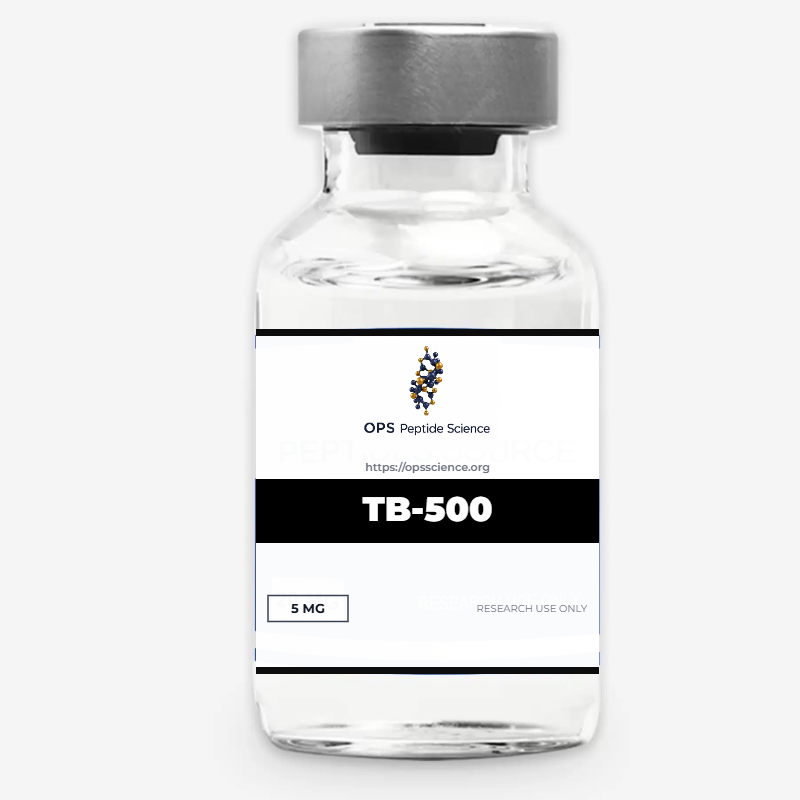
TB-500
Price range: $100.00 through $175.00
TB-500 continues to be one of the most respected regenerative peptides on the market because of its ability to support systemic healing, reduce inflammation, and improve flexibility this is done while maintaining a strong safety record in research settings. As the FDA review process unfolds and clinical trial pipelines mature, TB-500 may well transition from a research compound into a more mainstream therapeutic, particularly in regenerative and sports medicine.
TB-500
TB-500 is a synthetic version of a naturally occurring peptide known as Thymosin Beta-4 (TB-4) — a protein found in nearly every cell in the human body. Originally isolated from the thymus gland, Thymosin Beta-4 plays a central role in cell migration, tissue repair, and inflammation regulation. TB-500 is the lab-made fragment that mimics these regenerative properties and has become one of the most popular healing peptides among professional athletes, biohackers, and integrative medicine practitioners.
While BPC-157 often steals the spotlight for localized injury repair, TB-500 has carved out its own niche as a systemic recovery peptide — one that works throughout the entire body rather than just at injection sites. It is frequently stacked with BPC-157 for synergistic effects, but it stands powerfully on its own as a regenerative powerhouse.
How TB-500 Works: Mechanism of Action
TB-500 produces its regenerative effects through several interconnected biological pathways:
- Actin upregulation: TB-500 binds to and sequesters G-actin, promoting the production of actin filaments essential for cell structure, movement, and tissue repair.
- Cell migration: It enables stem cells, endothelial cells, and keratinocytes to travel to injury sites — accelerating healing where it’s needed most.
- Angiogenesis: Like BPC-157, TB-500 promotes the formation of new blood vessels, improving circulation in damaged areas.
- Anti-inflammatory action: It reduces inflammatory cytokines and modulates the immune response without suppressing it.
- Anti-fibrotic effects: TB-500 may help reduce scar tissue formation during healing, leading to cleaner, more functional repair.
- Flexibility and mobility: Many users report improved joint flexibility and reduced stiffness with consistent use.
This combination of cellular migration, blood vessel formation, and inflammation control is what makes TB-500 uniquely effective for full-body recovery.

Top Benefits of TB-500
TB-500 has earned its reputation as a versatile regenerative peptide thanks to its wide-ranging benefits:
- Accelerated muscle recovery — faster repair after intense training or injury.
- Tendon and ligament healing — particularly effective for chronic or stubborn soft-tissue damage.
- Improved flexibility and range of motion — reduced stiffness in joints and connective tissue.
- Reduced inflammation — both acute and chronic inflammatory conditions.
- Faster wound healing — improved skin closure and reduced scarring.
- Hair growth support — emerging evidence suggests TB-500 may stimulate follicle activity.
- Cardiovascular repair — animal studies show promising effects on heart tissue after damage.
- Eye tissue healing — research suggests benefits for corneal injury and dry eye conditions.
TB-500 for Athletes and Performance Recovery
TB-500 is especially prized in the athletic world for its ability to deliver healing where it’s needed without requiring direct injection at the injury site. Because the molecule is small and highly mobile, it can travel through the body and reach areas of inflammation or trauma — making it valuable for athletes dealing with multiple injuries simultaneously or systemic recovery from heavy training cycles.
Endurance athletes, combat sport competitors, powerlifters, and CrossFit athletes have all adopted TB-500 as part of recovery protocols, often in combination with BPC-157, to extend training longevity and reduce downtime.
TB-500 and Hair Growth: The Emerging Application
One of the more surprising benefits being investigated is TB-500’s role in hair follicle stimulation. Early research suggests Thymosin Beta-4 may promote the migration of hair follicle stem cells and improve scalp circulation, sparking interest in TB-500 as part of next-generation hair-loss protocols. While still preliminary, this application is gaining traction in aesthetic medicine clinics.
TB-500 Research and Clinical Evidence
TB-500 currently sits in the preclinical to early clinical evidence tier. There is robust animal research supporting its regenerative properties across tissue types — muscle, heart, skin, eyes, and nervous system — and limited human studies, mostly focused on cardiac applications and wound healing. Like BPC-157, it remains a research compound rather than an FDA-approved drug for human use.
TB-500 Side Effects and Safety Profile
TB-500 has shown a relatively clean safety profile in both animal studies and anecdotal human use. Reported side effects are typically mild and may include temporary fatigue, head rush, injection site reactions, or lightheadedness. The most significant theoretical concern, as with any angiogenic compound, is the possibility of supporting unwanted cellular growth — though no human data confirms this concern. Medical supervision is strongly recommended for anyone considering TB-500.
Regulatory Status: Is TB-500 Legal in 2026?
TB-500 was included on the FDA Category 2 restricted list in late 2023, halting its preparation by compounding pharmacies in the United States. As of 2026, it is among the seven peptides scheduled for review by the FDA’s Pharmacy Compounding Advisory Committee in July 2026, which may pave the way for reinstated compounding eligibility. Internationally, TB-500 remains widely available as a research-grade compound. WADA has banned it for use in competitive sport.
How Is TB-500 Administered?
TB-500 is most commonly administered via subcutaneous or intramuscular injection. Unlike BPC-157, which is often injected near injury sites, TB-500 can be injected anywhere on the body because its small molecular size allows it to travel systemically. Specific dosing protocols should always be guided by a qualified healthcare provider.
TB-500 vs BPC-157: Understanding the Difference
While both peptides are regenerative powerhouses, they work differently:
- BPC-157 is best for localized healing — tendon repair, gut issues, joint inflammation.
- TB-500 is best for systemic recovery — full-body inflammation, flexibility, multiple injury sites.
- Stacked together, they cover both local and systemic healing, which is why they are the most popular peptide pairing in recovery medicine.
Frequently Asked Questions About TB-500
Is TB-500 the same as Thymosin Beta-4? TB-500 is a synthetic fragment that mimics the active region of natural Thymosin Beta-4. They are very closely related but not identical molecules.
How long does it take TB-500 to work? Many users report effects within 2–6 weeks, with full results from a recovery cycle typically seen at 8–12 weeks.
Can TB-500 be stacked with BPC-157? Yes — this is one of the most popular peptide combinations for recovery, with each compound targeting complementary healing pathways.
Is TB-500 legal for athletes? No. TB-500 is prohibited under WADA rules and is banned in most professional and Olympic sports.
Does TB-500 build muscle? Not directly. It supports muscle repair and recovery, allowing for more frequent and effective training, but it does not stimulate muscle growth like anabolic compounds.
| Dosage | 10 mg, 5 mg |
|---|
Be the first to review “TB-500”
Related products
GLP-1
Immune
Healing
GH
Skin
Reviews
There are no reviews yet.