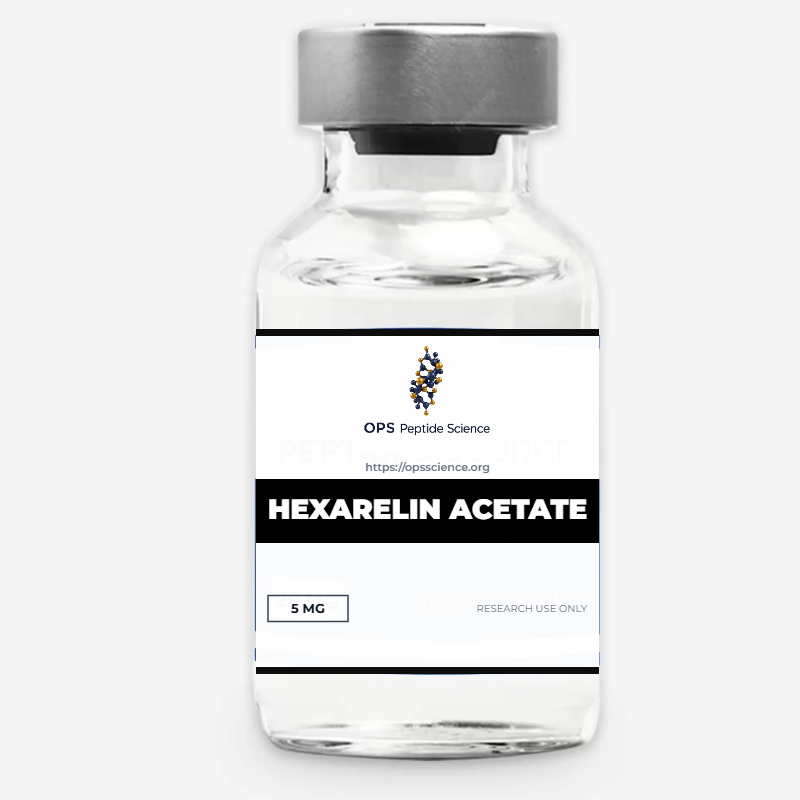
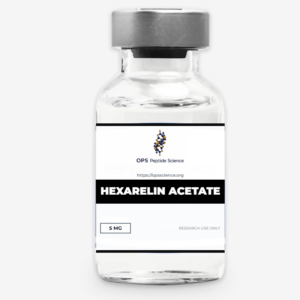
Hexarelin Acetate
$105.00
Hexarelin, GHRP-6, and GHRP-2 represent the first generation of true growth hormone peptide therapy — compounds that proved the concept and paved the way for the modern era of cleaner, more selective peptides like Ipamorelin. While they are no longer the first-line choice in most clinical protocols, they remain important compounds in the peptide world
Hexarelin, GHRP-6 & GHRP-2
Before Ipamorelin, before CJC-1295, before the modern era of clean and selective growth hormone peptides, there were the original Growth Hormone Releasing Peptides (GHRPs) — Hexarelin, GHRP-6, and GHRP-2. Developed in the 1990s and early 2000s, these compounds were among the first synthetic peptides capable of significantly increasing growth hormone release in humans.
All three belong to the same class of compounds known as ghrelin mimetics or growth hormone secretagogues — meaning they activate the ghrelin receptor (GHS-R1a) in the pituitary gland to trigger growth hormone release. While newer peptides like Ipamorelin have largely replaced them in clinical settings due to cleaner side-effect profiles, the original GHRPs still hold a respected place in peptide history and continue to be used in research and certain specialized protocols.
How GHRPs Work: Mechanism of Action
Hexarelin, GHRP-6, and GHRP-2 share a similar mechanism of action with some important differences in intensity and selectivity:
- Ghrelin receptor activation: All three bind to the GHS-R1a receptor in the pituitary, mimicking the natural hunger hormone ghrelin.
- Robust GH release: They trigger powerful, pulse-like surges of growth hormone — often stronger than the newer, more selective compounds.
- Synergy with GHRH analogs: Like Ipamorelin, they pair powerfully with sermorelin or CJC-1295 to amplify GH output through complementary pathways.
- Differential off-target effects: Unlike the newer Ipamorelin, these older GHRPs also significantly affect cortisol, prolactin, and appetite — to varying degrees depending on the specific compound.
This mix of powerful GH release with broader hormonal effects is the defining characteristic of the original GHRP family.
GHRP-6: The Appetite Stimulator
GHRP-6 is a hexapeptide that was one of the first widely-used growth hormone secretagogues. Its most notable feature — beyond GH release — is its dramatic appetite-stimulating effect.
GHRP-6 Benefits:
- Strong GH release
- Significant appetite stimulation (useful for bulking phases or recovery from illness)
- Improved sleep quality
- Joint healing and connective tissue support
- Anti-inflammatory effects
- Fat metabolism support
GHRP-6 Drawbacks:
- Hunger spikes can be overwhelming for those not seeking appetite stimulation
- Elevates cortisol and prolactin more than newer peptides
- Has fallen out of favor compared to cleaner alternatives
GHRP-6 remains popular among hard-gainers and those recovering from illness or low appetite states, but is generally considered the least clean of the three classic GHRPs.
GHRP-2: The Balanced Performer
GHRP-2 is widely considered the middle ground of the classic GHRP family — more potent than GHRP-6 at GH release, with less aggressive appetite stimulation, but still some off-target hormonal effects.
GHRP-2 Benefits:
- Strong, reliable GH release
- Moderate appetite stimulation (less intense than GHRP-6)
- Improved body composition
- Enhanced recovery and sleep
- Anti-aging effects
- Lean muscle support
GHRP-2 Drawbacks:
- Mild cortisol and prolactin elevation
- Some users still report appetite spikes
- Less selective than Ipamorelin
GHRP-2 is often used in performance and bodybuilding circles where strong GH pulses are desired without the appetite intensity of GHRP-6.
Hexarelin: The Most Potent of the Family
Hexarelin is the most powerful GH-releasing peptide of the classic three — producing the strongest, most aggressive GH pulses, sometimes rivaling or exceeding synthetic HGH in short bursts.
Hexarelin Benefits:
- The strongest GH release of any GHRP
- Cardiac-protective effects in research models
- Rapid recovery support
- Lean muscle and connective tissue benefits
- Potential cardioprotective and anti-fibrotic effects
Hexarelin Drawbacks:
- The highest cortisol and prolactin elevation of the three
- More rapid receptor desensitization (effectiveness can drop with long-term use)
- Less suitable for long-term protocols
- Strongest off-target effects of the family
Hexarelin is primarily used in short bursts or research protocols rather than long-https://biotechpeptides.comterm maintenance, due to its tendency to desensitize the GH axis when used continuously.
Top Benefits of the Classic GHRPs
Across the family, these older growth hormone peptides offer benefits including:
- Powerful, pulse-like GH release — often stronger than newer alternatives.
- Lean muscle support — protein synthesis and tissue repair.
- Improved body composition — fat loss and muscle preservation.
- Enhanced recovery — from training, injury, and illness.
- Better sleep quality — through restored GH pulses.
- Anti-aging effects — skin firmness, energy, and vitality.
- Cardioprotective effects (Hexarelin) — based on early research.
- Appetite support (GHRP-6 and GHRP-2) — useful in select clinical contexts.
- Synergy with GHRH analogs — strong amplification when stacked.
Classic GHRPs vs Ipamorelin: Why the Newer Peptide Won
If the classic GHRPs were so effective, why have most modern protocols shifted to Ipamorelin? The answer comes down to selectivity and side-effect profile:
- Ipamorelin stimulates GH release without significantly raising cortisol, prolactin, or appetite.
- GHRP-2 and GHRP-6 also stimulate GH, but with more cortisol and prolactin elevation and significant appetite effects.
- Hexarelin produces the strongest GH release but the most pronounced off-target effects.
For most longevity, anti-aging, and wellness applications, the cleaner profile of Ipamorelin makes it the better long-term choice. The classic GHRPs are still relevant for specific use cases where their unique properties — such as Hexarelin’s cardioprotective effects or GHRP-6’s appetite stimulation — are desired.
Classic GHRPs Research and Clinical Evidence
The classic GHRPs sit in a moderate clinical evidence tier. They have been extensively studied in human trials over the past two to three decades, with clear evidence of GH-releasing effects and acceptable short-term safety. However, none have achieved full FDA approval for general use, and they have largely been displaced in clinical practice by newer, more selective peptides like Ipamorelin and Tesamorelin.
Side Effects and Safety Profile
The classic GHRPs share a common set of potential side effects:
- Intense hunger (especially GHRP-6, moderate with GHRP-2, mild with Hexarelin)
- Elevated cortisol and prolactin (Hexarelin > GHRP-6 > GHRP-2)
- Water retention or mild puffiness
- Tingling or numbness in extremities
- Headache or lightheadedness
- Injection site irritation
- Possible receptor desensitization with prolonged use (especially Hexarelin)
Cycling these compounds and monitoring hormonal markers is essential for safe, sustained use. Medical supervision is strongly recommended.
Regulatory Status: Are Classic GHRPs Legal in 2026?
The classic GHRPs occupy a gray regulatory zone similar to many other research peptides. They are not FDA-approved for human use and are not currently widely available through licensed U.S. compounding pharmacies as of 2026. Globally, they remain available primarily as research-grade compounds. All three are banned by WADA for competitive athletes.
How Are GHRPs Administered?
These peptides are typically administered via subcutaneous injection, often multiple times per day to match their short half-lives. They are frequently stacked with GHRH analogs like sermorelin or CJC-1295 for synergistic effect. Specific dosing should only be determined by a qualified medical provider.
Frequently Asked Questions About Classic GHRPs
Which GHRP is the strongest? Hexarelin produces the strongest GH pulses but also the most off-target effects.
Which GHRP has the fewest side effects? Among the classic three, GHRP-2 has the most balanced profile. Ipamorelin, although technically a newer GHRP, has the cleanest profile overall.
Do GHRPs cause hunger? Yes — especially GHRP-6 (strong hunger), moderately with GHRP-2, and mildly with Hexarelin.
Are GHRPs safe for long-term use? Long-term safety is less established than newer peptides. Cycling and medical supervision are essential.
Can GHRPs be stacked with GHRH analogs? Yes — pairing them with sermorelin or CJC-1295 produces synergistic GH release.
Are GHRPs banned in sports? Yes — all classic GHRPs are prohibited by WADA.
| Dosage | 5 mg |
|---|
Be the first to review “Hexarelin Acetate”
Related products
Cognitive
GLP-1
GH
Immune
Reviews
There are no reviews yet.